Step 2 of “Pay Attention” pertains to Hebrews 1:1-3, where the supremancy of God’s Son, Jesus Christ is exclaimed. Considering how to get attention, the writer of Hebrews declared vital news to his listeners. He wanted to capture their attention. He did it by asserting central truths about Jesus Christ.
To get attention, he challenged the audience’s understanding of who is Jesus Christ. In Share Jesus Without Fear, one of the diagnostic questions is “To you, who is Jesus?” It's a tool, like a thermometer, that not only gets the hearer’s attention, but it assertains their core belief about Jesus.
To get your class members to “listen up”, you could hold up a thermometer and say, “let’s take your temp” and you’ll get everyone’s attention. Say, in effect, this is how the book of Hebrews starts. The writer wanted to get the attention of the readers.
Alternatively, if you want to start similar to Hebrews, pick some member of the class and discuss with him a detail of his life not known to the class. Start your class by saying, “We all know so-in-so as [state the well known facts such as father, lawyer, teacher, etc], but in talking with him before class I found out that in the past he was [state the new detail such president of an industry association, member of Who’s Who in America, etc.]. After this, state this was how the writer of Hebrews started his epistle. He wanted to get his readers to Listen Up!
Tuesday, August 29, 2006


Monday, August 28, 2006
LifeWay's Quicksource "Pay Attention"
I'm looking forward to studying Hebrews this fall, which begins with this week's lesson "Pay Attention" from Hebrews 1:1-2:4. LifeWay's Quicksource for "Pay Attention" is found on pages 3 and 7 thru 10. How is Quicksource helpful to you?
Friday, August 25, 2006
Permanent bond
Step 5 of “Singing of love” from Song of Songs 8:6-7 speaks to permanent love between two people. Two have become one in love--a love so strong and capable it can survive the most powerful destructive force and even death. Such love cannot be bought.
How would you illustrate a permanent bond between two mates? Superglue? At one time, birds were upheld as examples of fidelity and virtue because of their monogamous mating habits.
In math, we say that the number 19 is prime (it can’t be divided) like the love described in the focal verses. In addition, the number 19 is the combination of 7 and 12. The number 7 represents God, and the number 12 is a symbol of the Church. The love between these two is a permanent bond!
How would you illustrate a permanent bond between two mates? Superglue? At one time, birds were upheld as examples of fidelity and virtue because of their monogamous mating habits.
In math, we say that the number 19 is prime (it can’t be divided) like the love described in the focal verses. In addition, the number 19 is the combination of 7 and 12. The number 7 represents God, and the number 12 is a symbol of the Church. The love between these two is a permanent bond!
Thursday, August 24, 2006
Resolute love
Since Jan and I celebrated our 38TH today, I understand somewhat the resolve reflected in Song of Songs 6:1-3, the focal verses of Step 4 in this week’s LifeWay lesson “Singing of Love”. The decided commitment of the Lover and the Beloved hit a high note in verse 3. How resolute are you in your marriage (if you are married)? Do you ever toss around the divorce word, or are you unwavering on that issue?
Do you have any ideas for how to illustrate resoluteness in love, or unwavering love?
Do you have any ideas for how to illustrate resoluteness in love, or unwavering love?
Wednesday, August 23, 2006
What's appropriate?
Step 3 of “Song of Love” highlights Song of Songs 2:7, where a Biblical premarital relationship is described. The man takes the lead saying, “Let’s don’t rush this.” One view of sex is that it’s evil. Another view is it’s simply a biological act. What’s the Biblical view? Josh Harris is an expert on purity. I’ve previously used his video on purity successfully in class.
What other good, God-given intimacy do we abuse in our culture besides sex? Josh Harris claims we inappropriately “date” the church. We take advantage of it, satisfy our desires with it, and treat it in an ungodly manner. Discuss with your class improper dating of the church as described by Josh.
What other good, God-given intimacy do we abuse in our culture besides sex? Josh Harris claims we inappropriately “date” the church. We take advantage of it, satisfy our desires with it, and treat it in an ungodly manner. Discuss with your class improper dating of the church as described by Josh.
Tuesday, August 22, 2006
Overhear
Lesson “Singing of Love” comes from Song of Songs, Solomon’s greatest song. To underscore the importance of verbalizing the attraction between a man and a woman in love, Step 2 draws on verses 1:1, 1:15-2:3. She is singular in her beauty and he tells her (2:2). He is respected among men and she tells him (2:3). They are outdoors (1:17), possibly within earshot of others. This couple edifies one another out loud.
Ask members what others have overheard them say to their spouse, or overheard them say on a cell phone? Below are some paraphrases taken from http://www.overheard.com/ (very graphic site, so be warned!).
_________________________
Woman: Did you cheat on me?
Man: What do you think? Yes, or no?
Woman: No!
Man: Wrong.
_______________________________
Girl: I hate it when others criticize Frank.
Friend: He looks like Hitler.
Girl: If I didn’t love him, no one else would.
Frank: Thanks!
_______________________________
Man on cell: You asked me how I'm doing, and I tell you--and then you bring it back to yourself. You always do that.
Ask members what others have overheard them say to their spouse, or overheard them say on a cell phone? Below are some paraphrases taken from http://www.overheard.com/ (very graphic site, so be warned!).
_________________________
Woman: Did you cheat on me?
Man: What do you think? Yes, or no?
Woman: No!
Man: Wrong.
_______________________________
Girl: I hate it when others criticize Frank.
Friend: He looks like Hitler.
Girl: If I didn’t love him, no one else would.
Frank: Thanks!
_______________________________
Man on cell: You asked me how I'm doing, and I tell you--and then you bring it back to yourself. You always do that.
Monday, August 21, 2006
Think of a headline, not a title
Ahhh. We only get one-week of study from Songs of Songs (SoS), God’s handbook for dating, marriage and romance! How can we possibly do it justice in one, short lesson?
My wife and I thoroughly enjoyed attending Tommy Nelson’s 2-day conference on SoS, where he has helped many individuals and couples discover God’s deeper truth about love and sex in marriage.
As teachers, we have a great opportunity this week to teach a Bible book that most members know little about. Think of it as ‘news’ to most members. If you had to write a headline for SoS (as if it were a news story), what would you write?
Come up with some headlines and use them to introduce your study of SoS that will grab member's attention. Make your headlines sound newsy! After all, you do have great news to share!
Some suggestions:
Love making tips from SoS help save marriages in Houston today
SoS expert advises not to marry the ‘right person’
Raisin cakes and apples, the Bible’s aphrodisiac according to SoS
My wife and I thoroughly enjoyed attending Tommy Nelson’s 2-day conference on SoS, where he has helped many individuals and couples discover God’s deeper truth about love and sex in marriage.
As teachers, we have a great opportunity this week to teach a Bible book that most members know little about. Think of it as ‘news’ to most members. If you had to write a headline for SoS (as if it were a news story), what would you write?
Come up with some headlines and use them to introduce your study of SoS that will grab member's attention. Make your headlines sound newsy! After all, you do have great news to share!
Some suggestions:
Love making tips from SoS help save marriages in Houston today
SoS expert advises not to marry the ‘right person’
Raisin cakes and apples, the Bible’s aphrodisiac according to SoS
Saturday, August 19, 2006
A letter, not an email
Want to do something meaningful after studying Ecclesiastes? Read Letters from Dad, by Greg Vaughn. The reviews on Amazon are great. I just finished reading it. A class exercise is take one of the sample letters from the book's appendix and show it to the class. Pass out note cards and envelopes and have members write a note to a loved one using the sample letter as a guide. Have members mail their notes and report back to the class later any reactions from recipients they want to share. The results might surprise you!
Friday, August 18, 2006
Main point
Concluding “What’s the Bottom Line?” also concludes our study of Ecclesiastes. Paul Prather shared his conclusion of Ecclesiastes. Dan Puckett frames his understanding of the legacy we leave behind in light of Ecclesiastes. Share the nut of each of these articles with class members and ask them, “What’s your main take away after studying Ecclesiastes?”
Thursday, August 17, 2006
Profit's up
Step 4 of “What’s the Bottom Line?” covers the bottom line, or said in a business way, the ‘net profit’ from the Teacher’s search for what’s meaningful in life. He concludes in Ecclesiastes 12:13-14 with “fear God and keep His commandments.”
To illustrate good use of this profit, ask members to think of what prevents them from yielding to temptation when it comes? Is it concern over damaging a good reputation? No. Is it for love of family? No. What is it then? You might share with your class what Pastor Scott Riling related in the Wednesday night message this week. He told Chuck Swindoll’s story of resisting temptation while riding in an elevator. Chuck said,
“I was once in Canada. I had been away from home eight days and there were two more to go–a weekend. I was lonely and having a pity party for myself at supper—alone. I bought a newspaper, thumbed through the sports section, and found nothing but hockey—a Canadian favorite but not mine. I heaved a sigh and walked toward the elevator. En route, I heard a couple young women talking and laughing as they used the hotel phone in the lobby. I smiled as I passed by and a few steps later punched the “up” elevator button. I got on. So did the two ladies. I punched ‘6.’ They didn’t reach for the row of buttons, so I asked, ‘What floor?’ One looked at me rather sensually and said, ‘How about six? Do you have any plans?”We were alone on an elevator. In Canada. I was flattered, to be honest, since most folks don’t usually mistake me for Tom Selleck. These women were available and I was lonely. On that trip from the lobby to the sixth floor, I had an extremely significant decision to make...the bait had been dropped. Do you know what immediately flashed into my mind? My wife and children? No, not at first. My position and reputation? No, not then. The possibility of being seen or set up? No.
God gave me an instant replay of Galatians 6:7 where it says, ‘Do not be deceived: God cannot be mocked A man reaps what he sows.’ and Ephesians 6:11, ‘Put on the full armor of God so that you can take your stand agains the devil’s schemes.’ and Romans 6:11-12, ‘Even so consider yourselves to be dead to sin, but alive to God in Christ Jesus. Therefore do not let sin reign in your mortal body that you should obey its lusts.’ During that elevator lift, the memorized Word [verse after verse] flew to my rescue. I looked back at the two ladies and replied, ‘I’ve got a full evening planned already; I’m really not interested.’ They looked at me like I was some sort of fool and stayed on the elevator as I stepped off. I walked to my room grateful for the overcoming power of God’s book.”
To illustrate good use of this profit, ask members to think of what prevents them from yielding to temptation when it comes? Is it concern over damaging a good reputation? No. Is it for love of family? No. What is it then? You might share with your class what Pastor Scott Riling related in the Wednesday night message this week. He told Chuck Swindoll’s story of resisting temptation while riding in an elevator. Chuck said,
“I was once in Canada. I had been away from home eight days and there were two more to go–a weekend. I was lonely and having a pity party for myself at supper—alone. I bought a newspaper, thumbed through the sports section, and found nothing but hockey—a Canadian favorite but not mine. I heaved a sigh and walked toward the elevator. En route, I heard a couple young women talking and laughing as they used the hotel phone in the lobby. I smiled as I passed by and a few steps later punched the “up” elevator button. I got on. So did the two ladies. I punched ‘6.’ They didn’t reach for the row of buttons, so I asked, ‘What floor?’ One looked at me rather sensually and said, ‘How about six? Do you have any plans?”We were alone on an elevator. In Canada. I was flattered, to be honest, since most folks don’t usually mistake me for Tom Selleck. These women were available and I was lonely. On that trip from the lobby to the sixth floor, I had an extremely significant decision to make...the bait had been dropped. Do you know what immediately flashed into my mind? My wife and children? No, not at first. My position and reputation? No, not then. The possibility of being seen or set up? No.
God gave me an instant replay of Galatians 6:7 where it says, ‘Do not be deceived: God cannot be mocked A man reaps what he sows.’ and Ephesians 6:11, ‘Put on the full armor of God so that you can take your stand agains the devil’s schemes.’ and Romans 6:11-12, ‘Even so consider yourselves to be dead to sin, but alive to God in Christ Jesus. Therefore do not let sin reign in your mortal body that you should obey its lusts.’ During that elevator lift, the memorized Word [verse after verse] flew to my rescue. I looked back at the two ladies and replied, ‘I’ve got a full evening planned already; I’m really not interested.’ They looked at me like I was some sort of fool and stayed on the elevator as I stepped off. I walked to my room grateful for the overcoming power of God’s book.”
Wednesday, August 16, 2006
Where is your focus?
 Step3 of “What’s the Bottom Line?” is based on Ecclesiastes 12:1-5. The Teacher once again focuses on influencing young people. What about the older folks? What advice does the Teacher give to someone past middle age, for example?
Because of the Teacher’s call to “remember,” these verses recall to my mind Peter’s last words in 2 Peter 1:15-21, where he also admonishes us to “remember” and “reminds” to “pay attention.”
You might try using an hourglass to illustrate the Teacher’s as well as Peter’s call to remember and pay attention to God. When the hourglass is full (youth) we freely take our eye off of it, but as the sand nears depletion (old age), we stare at the hourglass and ready ourselves as we watch the last grains of sand fall. We want to be prepared to meet God, our Creator, with full focus when the end comes.
Tuesday, August 15, 2006
The point is...
Step 2 of this last lesson “What’s the Bottom Line?” by LifeWay is from Ecclesiastes 11:9-10. Mark Rathel’s comments suggest an alternate title, “What is the essential point of life?”
According to verse 10, the key idea is to live life, but do it in awareness that God will judge us, each individually. This should inspire living in obedient alertness to God, like an attentive servant ready to do His master’s will. With this in mind, ask members what they personally rejoice about in life as recommended by the Teacher in verse 9.
According to verse 10, the key idea is to live life, but do it in awareness that God will judge us, each individually. This should inspire living in obedient alertness to God, like an attentive servant ready to do His master’s will. With this in mind, ask members what they personally rejoice about in life as recommended by the Teacher in verse 9.
Monday, August 14, 2006
Create a little tension
To start this last lesson from Ecclesiastes, “What’s the meaning of life?”, I think it would be good to summarize the book beginning with chapter 1 up to the start of this week’s passage: Eccl 11:7-12:14 and see if you can create a little tension: “And the answer is…”.
You can look thru your previous lessons and make your own summary, or just summarize the article The Meaning of Life. This lesson concludes Ecclesiastes, so it’s important to refresh member’s working memory the main ideas of the previous chapters. Otherwise, having forgot the salient points, they may start to reason in circles, or assume the conclusion. If so, the empirical truth of the Teacher’s search would be lost. That would be a waste, since the Teacher was a real man, who conducted a real search for the real meaning of life, and came to an important conclusion. Don’t lose the teachable moment, so ask members to personally answer the question: “What is the meaning of life?”
I liked the illustration of “How can we get all the air out of a glass?” Jesus Christ fills our lives with meaning.
You can look thru your previous lessons and make your own summary, or just summarize the article The Meaning of Life. This lesson concludes Ecclesiastes, so it’s important to refresh member’s working memory the main ideas of the previous chapters. Otherwise, having forgot the salient points, they may start to reason in circles, or assume the conclusion. If so, the empirical truth of the Teacher’s search would be lost. That would be a waste, since the Teacher was a real man, who conducted a real search for the real meaning of life, and came to an important conclusion. Don’t lose the teachable moment, so ask members to personally answer the question: “What is the meaning of life?”
I liked the illustration of “How can we get all the air out of a glass?” Jesus Christ fills our lives with meaning.
Friday, August 11, 2006
How can I handle...
 To conclude “How Can I Handle Life’s Uncertainties?” consider discussing specific issues (which were uncertainties at some point) and the Teacher’s wisdom for handling them. Below is a sample list I put together.
Start with “How can I handle...?”
acute anxiety which keeps me awake at night?
my spouse’s changed behavior?
peer conflict at work?
my spouse’s anger toward me?
people that monopolize discussions?
my poor expectation of others?
untimely death?
the fact that I am twice the age of my new boss?
pressure and stress of my responsibilities?
the uncertainty of the future?
As a funny you could start by playing the video of how to handle mosquitoes.
Thursday, August 10, 2006
Where to invest?
The LifeWay material skips Eccl 10 to arrive at Step 4 of “How Can I Handle Life’s Uncertainties?” where we study Eccl 11:1-2, 4-6. The LifeWay Leader Guide commentary suggests that verses 1-2 refer to financial investments. But James Adair narrows his interpretation to the idea of investing in “other people.” He says:
“The Teacher urges his listeners to do good to other people, even if there is no likelihood of immediate return on their investment. Eventually, he says, one's good behavior in regard to others will pay off.”
Pastor Randall Adkisson offers a similar interpretation to Adair’s. How do you plan to present the meaning of these verses?
“The Teacher urges his listeners to do good to other people, even if there is no likelihood of immediate return on their investment. Eventually, he says, one's good behavior in regard to others will pay off.”
Pastor Randall Adkisson offers a similar interpretation to Adair’s. How do you plan to present the meaning of these verses?
Wednesday, August 09, 2006
No one is exempt
 Eccl 9:11-12 declares that the unexpected can happened to anyone in life no matter what talents or resources they might possess. We can all expect the unexpected, so when it happens, don’t give up!
For Step 3 of the lesson “How can I handle life’s uncertainties?”, discuss with members the reasons behind the last time they wanted to drop out of some activity. Alternatively, you can present the following list of 'reasons' people “stopped going to church,” which I gathered from the WWW. As a group, speculate what the unexpected element was behind each excuse.
My boyfriend wouldn’t allow it.
The hypocrisy I observed in the church.
I didn’t need instant friends.
I couldn’t find a church I liked.
I was trapped in a marriage that was going nowhere.
My experience was not fulfilling.
I couldn’t sit still.
I didn’t have to.
My father wasn’t religious.
They didn’t worship God.
Tired of being told I was going to hell.
It wasn’t relevant.
Religion is fraud.
I started working on Sundays.
I couldn’t smoke anymore.
I didn’t want anything to interfere with my weekend.
None of my problems were being solved.
Tuesday, August 08, 2006
Who is in control?
“Be joyful always…give thanks in all circumstances” (1 Thes 5:16-18) were part of Paul’s instructions for living the Christian life. In this week’s Explore the Bible lesson, “How Can I Handle Life’s Uncertainties,” Solomon says much the same thing in Eccl 9:7-10 where he tells us to simply enjoy life. However, because life is unpredictable, we attempt to reduce uncertainty by creating an illusion of control. For Step 2 of the lesson, illustrate illusion of control by repeatedly tossing a coin and calling heads or tails. Initially, the random results may look like you can choose to toss “heads” instead of “tails”, for example. The reality is, however, over a large enough sample size, you will toss an equal number of both choices. Discuss with members situations where they feel in control, but the reality is God is in control.
Monday, August 07, 2006
How can I handle life’s uncertainties?
For August 13, the LifeWay Explore the Bible lesson from Eccl 9:1-11:6 is titled “How can I handle life’s uncertainties?” Verse 9:11 makes clear that uncertainty in life is guaranteed. When things go wrong, how do you respond? To introduce the lesson, show a slide of various quotations of Murphy’s Law and ask members to share ones they have experienced in life. As they answer, highlight how the people involved responded. When finished, point out the topic of the lesson is how to respond when things don’t go as we expect.
Saturday, August 05, 2006
Is it Biblical?
To conclude this week’s lesson “How Can I Stay on Course?”, make the obvious point that we should live according to what the Bible says. For many of us, however, when a question in life crosses our minds we wonder, “Is that Biblical?” What are your thoughts about relying on people like Hank Hanegraaff, known as The Bible Answer Man? He accepts questions about the Bible on his radio program and on his web site. Who do you recommend to help determine Godly wisdom?
Regarding this blog site, in July monthly traffic continued to increase, according to Statcounter.com. I know many of you look for “ideas” when preparing to teach and I’m grateful for all who visit and read these posts. Please remember to take time to share your ideas, too.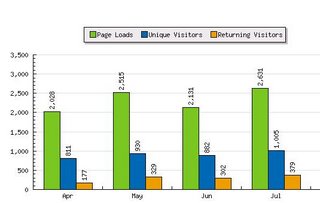
Regarding this blog site, in July monthly traffic continued to increase, according to Statcounter.com. I know many of you look for “ideas” when preparing to teach and I’m grateful for all who visit and read these posts. Please remember to take time to share your ideas, too.
Friday, August 04, 2006
Just deal with it
For the final point of the lesson “How Can I Stay on Course?”, Step 5 of the LifeWay material, which is based on Eccl 7:21-22, advocates allowing for human frailty when dealing with rude, unkind, and impatient people. In modern speak, I often hear the phrases, “just deal with it,” “suck it up,” or, “don’t let it get you down! Just keep going.”
When confronted with rudeness, unkindness, or impatience, the idea is to forget it, avoid becoming resentful, or even worse, developing an attitude of hate. Don’t let it become an excuse that turns you into victim of your own making. Take Solomon’s advice in Proverbs 17:14, “Starting a quarrel is like breaching a dam; so drop the matter before a dispute breaks out.”
When confronted with rudeness, unkindness, or impatience, the idea is to forget it, avoid becoming resentful, or even worse, developing an attitude of hate. Don’t let it become an excuse that turns you into victim of your own making. Take Solomon’s advice in Proverbs 17:14, “Starting a quarrel is like breaching a dam; so drop the matter before a dispute breaks out.”
Thursday, August 03, 2006
Moderation
Eccl 7:10-14 is the basis of Step 4 in the August lesson “How Can I Stay on Course?”, or “live life with Godly perspective.” Going a bit further, James Adair writing for the Baptist Standard titles the lesson Fear God, but Beware of Legalism as he focuses on Eccl 7:16-18 to highlight living according to the principle of moderation set forth by Aristotle.
According to Nancy Mansell, Master Christian Life Coach, “The Lord says we shall do all things in moderation.” Is that true? Nevertheless, how should a Christian respond to the idea of doing “all things in moderation?”
According to Nancy Mansell, Master Christian Life Coach, “The Lord says we shall do all things in moderation.” Is that true? Nevertheless, how should a Christian respond to the idea of doing “all things in moderation?”
Wednesday, August 02, 2006
Foolish pride
 Step 3 of the August lesson “How Can I Stay on Course?” is based on Eccl 7:5-9. Show this video and make the point that we sometimes miss the obvious because of our pride. Point out that the pride of the guards in the clip makes them look foolish. Similarly, our pride causes us to become foolish when we ignore, for example, appropriate criticism from others. Have members share what helps them avoid foolish pride in their lives.
Tuesday, August 01, 2006
Prepare to die
In the movie Princess Bride, the character Inigo Montoya played by Mandy Patinkin has the line, “Prepare to die.” Count Rugen played by Christopher Guest answers, “Stop saying that!”
In Eccl 7:1-4, Solomon is declaring what’s best (for gaining wisdom) and he says in essence, “Prepare to die.” Like Count Rugen, we want to say, “Stop saying that!”
For Step 2 in the lesson “How can I stay on course?” take time to explain these verses, otherwise people will be confused by a couple of the assertions made in the text.
Members should be able to discuss what steps they have taken to prepare for death, for example, preparing a will. This document will help settle earthly matters, but what’s needed to prepare for meeting God? Those are what’s best here on earth.
In Eccl 7:1-4, Solomon is declaring what’s best (for gaining wisdom) and he says in essence, “Prepare to die.” Like Count Rugen, we want to say, “Stop saying that!”
For Step 2 in the lesson “How can I stay on course?” take time to explain these verses, otherwise people will be confused by a couple of the assertions made in the text.
Members should be able to discuss what steps they have taken to prepare for death, for example, preparing a will. This document will help settle earthly matters, but what’s needed to prepare for meeting God? Those are what’s best here on earth.
Monday, July 31, 2006
What do you think is best?
The August 6 lesson “How Can I Stay on Course?” is based on Eccl. 7:1-8:17. According to Mark Rathel, Solomon answers in these chapters the question asked at the end of chapter 6: “What is good?” Another way of saying this is “What’s best for us?” In the time setting of the movie with the same title, Conan the Barbarian offered a take on What’s Best In Life?
For this week consider starting the class by asking members “According to popular wisdom, what is best for us in this life?” Make a list of their answers on a maker board. Here is a list of recommended “best things.” Here is another. What do you think is best for us in life?
For this week consider starting the class by asking members “According to popular wisdom, what is best for us in this life?” Make a list of their answers on a maker board. Here is a list of recommended “best things.” Here is another. What do you think is best for us in life?
Saturday, July 29, 2006
Life failure
 To conclude the lesson this week review what wanting wealth can lead to by summarizing Death of Salesman and the main character’s failure in life.
How do we avoid wanting wealth?
Friday, July 28, 2006
Friends
 Randall Adkisson commenting on “What’s Wrong With Wanting Wealth?” notes: addition of friends brings satisfaction, not wealth. For Step 5 of the lesson, discuss with members how they’ve enjoyed the work of their hands, but missed the fellowship of friends. It’s dissatisfying from the perspective of not having friends with whom to share life. Explore with the members (especially the men) how to build genuine friendships.
Thursday, July 27, 2006
I'm sleepy
Verses Eccl 5:10-13,17,19-20 support Step 4 of “What’s Wrong With Wanting Wealth?” intrigue me because of verse 12a: “The sleep of the worker is sweet”. John Piper said, “God can perform more good for those who trust Him while they sleep than they can perform with anxious labor for themselves while awake.” Why do you think the average length of a night’s sleep is getting shorter?
Wednesday, July 26, 2006
Who? Me?
 This article describes an incident that reinforces the equation “wealth equals corruption.” So nothing has changed since Solomon wrote Ecclesiastes 5:8-9, from which Step 3 of “What’s Wrong With Wanting Wealth?” comes.
The LifeWay Leader Guide steers the discussion to the Christian response to corruption in society. You might want to read Amos 5:10-15 and discuss how members should respond to corruption in their own lives.
Tuesday, July 25, 2006
Solomon is right, of course, but what is he right about?
The translation of Ecclesiastes 4:4 is significantly different in various translations of the Bible. The Amplified reading seems to emphasize ALL the PAIN in work and ALL the SKILL in work and not work itself comes from envy, or rivalry in a life lived without God. The New Living Translation really softens the impact of the verse 4. The HCSB and NASB reading more or less agree with the NIV translation, which puts the emphasis on LABOR and ACHIEVEMENT.  For Step 2 of Explore the Bible lesson “What’s Wrong With Wanting Wealth?”, I suggest showing a slide of various translations of verse 4 to members and discuss the meaning of the verse. To help, arrange the various translations in order from literal (word for word) to understandable translations (thought for thought) to paraphrase.
What do you think this verse means? Remember, he is speaking about living “under the sun” (without God), as contrasted to living with God (Col 3:23) where everything that does not come from faith is sin.
The study questions offered by SonShine for this lesson suggests an alternate lesson title, “What is Really Better in Life?”, which can be used to have a “what’s better” discussion with members concerning verse 4.
 For Step 2 of Explore the Bible lesson “What’s Wrong With Wanting Wealth?”, I suggest showing a slide of various translations of verse 4 to members and discuss the meaning of the verse. To help, arrange the various translations in order from literal (word for word) to understandable translations (thought for thought) to paraphrase.
What do you think this verse means? Remember, he is speaking about living “under the sun” (without God), as contrasted to living with God (Col 3:23) where everything that does not come from faith is sin.
The study questions offered by SonShine for this lesson suggests an alternate lesson title, “What is Really Better in Life?”, which can be used to have a “what’s better” discussion with members concerning verse 4.
Monday, July 24, 2006
Todays get rich quick schemes
Once, when considering a new job opportunity, I told a friend that I hoped to make more money so I could give more. He cautioned me against the desire of wanting more money. At the time I wondered “What’s Wrong With Wanting Wealth?”, which is the topic of this week’s Explore the Bible lesson from Ecclesiastes 4:1-6:12.
Here is one get rich quick promotion. Can members identify others such as this one? What is the mindset of the audience that pays to listen to these promotions?
I’m traveling this week and may not be able to blog if the hotels don’t offer convenient Internet access. Be sure and investigate the resource links on the right side of this page for Bible teaching ideas this week.
Here is one get rich quick promotion. Can members identify others such as this one? What is the mindset of the audience that pays to listen to these promotions?
I’m traveling this week and may not be able to blog if the hotels don’t offer convenient Internet access. Be sure and investigate the resource links on the right side of this page for Bible teaching ideas this week.
Sunday, July 23, 2006
Serving others in love
The graph below shows the resuls of the poll for "What's Life All About?" Remember Paul's words in 2 Cor 5:14, "For Christ's love compels us...", so serving others out of love for Christ is a sound choice.
This past week we had 203 unique visitors, and 79 returning visitors. So about 13% of the returning visitors voted in the poll. Great job!

This past week we had 203 unique visitors, and 79 returning visitors. So about 13% of the returning visitors voted in the poll. Great job!

Saturday, July 22, 2006
One more take...One more point
Here is one final take on “What Life is All About”. Harry Leafe points out in his book Running to Win (pg.41) that someone held captive to the philosophies of this world can only be freed by God after careful administration of the Word (2 Tim 2:24-26). I suggest closing the lesson in prayer for those who are held captive by the devil and are missing living life with God.
P.S.
The following is the complete lesson plan for “What’s Life All About?” from Hampton Road Baptist Church.
Supplemental Teaching Plan
July 23, 2006, What’s Life All About?
Background Passage: Ecclesiastes 1:1-3:2
Lesson Focal Passage: Ecclesiastes 1:1-2, 16-17; 2:1, 3-4, 11, 24, 26; 3:16-17
Biblical Truth: Experience teaches the futility of seeking fulfillment apart from a personal faith relationship with God.
Life Impact: To help you experience fulfillment in a personal relationship with God.
I. Introduction
We completed the study of Job last week and will now look at the second of the wisdom books we are studying this quarter: Ecclesiastes. Ecclesiastes is usually ascribed to King Solomon based on Ecclesiastes 1:1. The first three chapters deal with the apparent futility of life without God. Do you ever get concerned with the futility of what you are doing? Mowing the yard is one of those for me. There is something futile about mowing the grass and then fertilizing and watering it so that it grows and you need to mow it! It is just a thought—not a very good one, but a thought. Some others are cleaning the house and washing the dishes: they just get dirty again. Seriously, these are not the things Solomon is referring to. He is talking about the futility of life lived outside the context of a relationship with Him.
In the first chapter, he looks at some of the dichotomies of life and sees nothing but futility in trying to understand these things from your own standpoint. He states that he has great wisdom but it does him little good in and of itself. After all, great wisdom just increases sorrow and grief (v. 1:18).
The second chapter declares that human pleasures, work, and possessions are meaningless.
The third chapter starts with one of the most recognizable poems in the Old Testament, declaring that for everything there is a time and a season (The Byrds). The third chapter bemoans the struggles of life and the injustice of death, concluding that only in God can we find meaning. The Bible in Context section of the Leaders’ Guide is very brief this week and needs to be supplemented.
Open the class in prayer.
II. Is Fulfillment Found in Wisdom? (Eccl 1:1-2, 16-17)
Eccl. 1:1-2 introduce the writer and the theme of the book. While all of the passage from 1:3-15 is good, I will not discourage your decision to move right to verses 16-17. Solomon first sees the futility of trying to find satisfaction in life through the accumulation of knowledge and wisdom—human knowledge and wisdom. This goes along well with the study of Job we just finished. Human wisdom cannot give us satisfactory answers to difficult questions. It is a perpetual process and a downward spiral. The more questions we try to answer, the more are raised. This is not to say we are not to pursue knowledge and wisdom, but it does give us an indication of the futility of the process outside a relationship with Jesus Christ.
The second thing about this quest is found in 1:17: Solomon explored both wisdom and folly and found these to be meaningless as well. I will share a couple of illustrations with you: first, in learning to identify counterfeit bills, U. S. Treasury agents don’t examine counterfeit bills. Instead, they study real ones until they can identify any bill that doesn’t look like the real thing. Robert Kriegel, in his book If It Ain’t Broke, Break It! (1991) says not to look where you don’t want to go. He uses the illustration of a man driving down a narrow country road with bar ditches on either side. Not wanting to end up in the bar ditch, he constantly keeps his eyes on the side of the road. Guess where he will end up. You’ve got it—in the bar ditch. If you want to stay on the road, keep your eyes on the road. If you want to recognize wisdom, look to God, not to folly!
III. Is Fulfillment in “The Good Life?” (Eccl. 2:1, 3-4, 11)
Solomon decides to test the life of decadence to see if that is where he will find meaning. But alas, that is not where we find fulfillment in life either. One thing Solomon says is that he explored these things in the context of wisdom—good try, Solomon! In my day (the sixties) it was using a little weed to “enhance perception.” People often imagine things are much funnier when they have had too much to drink. Smokers think the cigarette makes things “taste better.” This thought seems to be as old as humankind. Unfortunately, it didn’t work then, it didn’t work in the sixties, and it doesn’t work now.
IV. Is Fulfillment Found in Pleasing God? (Eccl. 2:24, 26; 3:16-17)
Solomon finally comes to a startling (to him) conclusion: the best thing to do is live life to the fullest within the context of a relationship with God. God is the giver of knowledge, wisdom, and joy. ALL truth is God’s truth, so it is a noble pursuit to search diligently for truth. Sometimes Christians denigrate science because it does not discover truth within God’s Holy Bible. But that same Bible says that all truth comes from God, so scientific truth (if it is real Truth) comes from God too. Let’s not lose sight of that. Of course, the reality is that the truth science discovers is, for the most part, just a piece of the puzzle in the search for Truth. Still, when we find everlasting, unchanging Truth, whether in Scripture or in the laboratory, it comes from God.
Solomon’s final discovery is that when he looks for wickedness, he finds God’s righteousness and when he searches for righteousness he finds wickedness along side. This is reminiscent of Jesus’ parable of the wheat and the tares. Ultimately, it is God who is the judge of the righteous and the unrighteous, and it is up to us to approach these issues with a modicum of humility. Quoting again from the movie Rocky, “There are only two immutable truths: first, there is a God and, second, I’m not Him.” Let’s remember that when we judge someone or something. We might use the same principle in interpreting the Truth of Scripture. As a professor of mine once said, “All Scripture is divine; all interpretation of Scripture is human.” Let this help you discover humility.
V. Conclusion
This has been short. I’m sorry I didn’t have time to prepare more. Likewise, I’m sorry I will not post a supplemental lesson plan for July 30 since I will be in Washington taking part in the Washington Institute. Preparation for this institute has been difficult and I am tired. I will be back in town on July 29, and I will conduct the FOCUS meeting on July 30 and I will post the supplemental teaching plan for August 6.
You may wish to close the class period with the playing of hit song from the Byrds or merely read the poem from the King James Version.
Bro. Bob
Close the class in prayer.
P.S.
The following is the complete lesson plan for “What’s Life All About?” from Hampton Road Baptist Church.
Supplemental Teaching Plan
July 23, 2006, What’s Life All About?
Background Passage: Ecclesiastes 1:1-3:2
Lesson Focal Passage: Ecclesiastes 1:1-2, 16-17; 2:1, 3-4, 11, 24, 26; 3:16-17
Biblical Truth: Experience teaches the futility of seeking fulfillment apart from a personal faith relationship with God.
Life Impact: To help you experience fulfillment in a personal relationship with God.
I. Introduction
We completed the study of Job last week and will now look at the second of the wisdom books we are studying this quarter: Ecclesiastes. Ecclesiastes is usually ascribed to King Solomon based on Ecclesiastes 1:1. The first three chapters deal with the apparent futility of life without God. Do you ever get concerned with the futility of what you are doing? Mowing the yard is one of those for me. There is something futile about mowing the grass and then fertilizing and watering it so that it grows and you need to mow it! It is just a thought—not a very good one, but a thought. Some others are cleaning the house and washing the dishes: they just get dirty again. Seriously, these are not the things Solomon is referring to. He is talking about the futility of life lived outside the context of a relationship with Him.
In the first chapter, he looks at some of the dichotomies of life and sees nothing but futility in trying to understand these things from your own standpoint. He states that he has great wisdom but it does him little good in and of itself. After all, great wisdom just increases sorrow and grief (v. 1:18).
The second chapter declares that human pleasures, work, and possessions are meaningless.
The third chapter starts with one of the most recognizable poems in the Old Testament, declaring that for everything there is a time and a season (The Byrds). The third chapter bemoans the struggles of life and the injustice of death, concluding that only in God can we find meaning. The Bible in Context section of the Leaders’ Guide is very brief this week and needs to be supplemented.
Open the class in prayer.
II. Is Fulfillment Found in Wisdom? (Eccl 1:1-2, 16-17)
Eccl. 1:1-2 introduce the writer and the theme of the book. While all of the passage from 1:3-15 is good, I will not discourage your decision to move right to verses 16-17. Solomon first sees the futility of trying to find satisfaction in life through the accumulation of knowledge and wisdom—human knowledge and wisdom. This goes along well with the study of Job we just finished. Human wisdom cannot give us satisfactory answers to difficult questions. It is a perpetual process and a downward spiral. The more questions we try to answer, the more are raised. This is not to say we are not to pursue knowledge and wisdom, but it does give us an indication of the futility of the process outside a relationship with Jesus Christ.
The second thing about this quest is found in 1:17: Solomon explored both wisdom and folly and found these to be meaningless as well. I will share a couple of illustrations with you: first, in learning to identify counterfeit bills, U. S. Treasury agents don’t examine counterfeit bills. Instead, they study real ones until they can identify any bill that doesn’t look like the real thing. Robert Kriegel, in his book If It Ain’t Broke, Break It! (1991) says not to look where you don’t want to go. He uses the illustration of a man driving down a narrow country road with bar ditches on either side. Not wanting to end up in the bar ditch, he constantly keeps his eyes on the side of the road. Guess where he will end up. You’ve got it—in the bar ditch. If you want to stay on the road, keep your eyes on the road. If you want to recognize wisdom, look to God, not to folly!
III. Is Fulfillment in “The Good Life?” (Eccl. 2:1, 3-4, 11)
Solomon decides to test the life of decadence to see if that is where he will find meaning. But alas, that is not where we find fulfillment in life either. One thing Solomon says is that he explored these things in the context of wisdom—good try, Solomon! In my day (the sixties) it was using a little weed to “enhance perception.” People often imagine things are much funnier when they have had too much to drink. Smokers think the cigarette makes things “taste better.” This thought seems to be as old as humankind. Unfortunately, it didn’t work then, it didn’t work in the sixties, and it doesn’t work now.
IV. Is Fulfillment Found in Pleasing God? (Eccl. 2:24, 26; 3:16-17)
Solomon finally comes to a startling (to him) conclusion: the best thing to do is live life to the fullest within the context of a relationship with God. God is the giver of knowledge, wisdom, and joy. ALL truth is God’s truth, so it is a noble pursuit to search diligently for truth. Sometimes Christians denigrate science because it does not discover truth within God’s Holy Bible. But that same Bible says that all truth comes from God, so scientific truth (if it is real Truth) comes from God too. Let’s not lose sight of that. Of course, the reality is that the truth science discovers is, for the most part, just a piece of the puzzle in the search for Truth. Still, when we find everlasting, unchanging Truth, whether in Scripture or in the laboratory, it comes from God.
Solomon’s final discovery is that when he looks for wickedness, he finds God’s righteousness and when he searches for righteousness he finds wickedness along side. This is reminiscent of Jesus’ parable of the wheat and the tares. Ultimately, it is God who is the judge of the righteous and the unrighteous, and it is up to us to approach these issues with a modicum of humility. Quoting again from the movie Rocky, “There are only two immutable truths: first, there is a God and, second, I’m not Him.” Let’s remember that when we judge someone or something. We might use the same principle in interpreting the Truth of Scripture. As a professor of mine once said, “All Scripture is divine; all interpretation of Scripture is human.” Let this help you discover humility.
V. Conclusion
This has been short. I’m sorry I didn’t have time to prepare more. Likewise, I’m sorry I will not post a supplemental lesson plan for July 30 since I will be in Washington taking part in the Washington Institute. Preparation for this institute has been difficult and I am tired. I will be back in town on July 29, and I will conduct the FOCUS meeting on July 30 and I will post the supplemental teaching plan for August 6.
You may wish to close the class period with the playing of hit song from the Byrds or merely read the poem from the King James Version.
Bro. Bob
Close the class in prayer.
Friday, July 21, 2006
How to break free?
 The LifeWay Leader Guide concludes the lesson “What’s Life All About?” with a focus on Jesus Christ as the way of salvation (John 14:6). This is important since living life without God is futile, but is salvation the key need of your class members?
If so, then go that direction, but an alternative might be that believing members are captive to the ways of this world. Paul warns against this in Col 2:8, “Be careful that no one takes you captive through philosophy and empty deceit based on human tradition, based on the elemental forces of the world, and not based on Christ.” What Bible teaching should you conclude your lesson with if this is the case? How about doing what Paul says in 2 Cor 10:3-5? Could you suggest a passage from Ephesians? Any others?
Thursday, July 20, 2006
What?
Step 4 of “What’s Life All About?” includes Ecclesiastes 2:26, which seems more understandable out of the NLT than HCSB. The last sentence is what seems out of place. God is doing the giving, so why is that futile (vaporous, meaningless, useless, etc.)?
Question: Are you studying the Bible, or are you studying the Quarterly?
Question: Are you studying the Bible, or are you studying the Quarterly?
Wednesday, July 19, 2006
Futility in the good life
 Eccl. 2:1, 3-4, 11 makes clear the futility of looking for satisfaction by living “the good life”. Read the story of Leo Tolstoy and note how he realized the answer to “What’s Life All About?”, which is the point of Step 3 in this week’s ETB lesson from LifeWay.
I stood next to this light house on the west coast of Michigan a couple of weeks ago. I'm reminded that Jesus Christ is the Light of the world, John 8:12.
Tuesday, July 18, 2006
Can a satisfying life be found outside of God?
Step 2 of “What’s Life All About” is taken from Eccl 1:1-2, 16-17. Solomon looked for a satisfying life outside of God, i.e. under the sun. He found nothing that offered permanent satisfaction. He found what’s done is done and can’t be undone. Great education didn’t offer a solution. Instead of meaning, it offered only greater sorrow and grief.
Why do even Christians search for meaning in life outside of God today? The enemy can take Christians captive (Col 2:8). Christians are to renew their minds (Rom 12:2), the place where the battle happens and take every thought captive for Christ (2 Cor 10:3-5). Teachers, note our role mentioned in Eph 4:11-16.
With Col 1:12-13 in mind, have people put on sunglasses that have them. Ask them to describe the difference in their view of the room with and without their sunglasses. It’s darker of course. Just as Satan tempted Jesus, Christians are tempted today (1 John 2:16). Accepting the philosophies of this world changes our view.
Why do even Christians search for meaning in life outside of God today? The enemy can take Christians captive (Col 2:8). Christians are to renew their minds (Rom 12:2), the place where the battle happens and take every thought captive for Christ (2 Cor 10:3-5). Teachers, note our role mentioned in Eph 4:11-16.
With Col 1:12-13 in mind, have people put on sunglasses that have them. Ask them to describe the difference in their view of the room with and without their sunglasses. It’s darker of course. Just as Satan tempted Jesus, Christians are tempted today (1 John 2:16). Accepting the philosophies of this world changes our view.
Monday, July 17, 2006
“What’s life all about?”
Given where I am in life, I’ve looked forward to studying Ecclesiastes. What is the goal of my life now that I’m retired? The goal of a mustard seed is to become a mustard tree. The goal of Jesus’ life was to die for the sins of the world, mine in particular. What am I living for? What am I becoming?
For Ecclesiastes, the LifeWay Explore the Bible lesson unit is called “When Life Seems Absolutely Futile,” which is very relevant in my mind. The first lesson in the series is called “What’s life all about?” and it’s based on Eccl 1:1-3:22.
You’d get various answers if you ask, “What’s the meaning of life?” More simply, pick a choice from the poll on the right (I know the answers are somewhat vague, but you don’t want to read a book on each one).
For Ecclesiastes, the LifeWay Explore the Bible lesson unit is called “When Life Seems Absolutely Futile,” which is very relevant in my mind. The first lesson in the series is called “What’s life all about?” and it’s based on Eccl 1:1-3:22.
You’d get various answers if you ask, “What’s the meaning of life?” More simply, pick a choice from the poll on the right (I know the answers are somewhat vague, but you don’t want to read a book on each one).
Sunday, July 16, 2006
"Submit" meaning
The graph shows the poll results from last week's lesson "Submit to the Sovereign LORD". Last week we had 188 unique visitors, and 87 returning visitors. So about 10% of the returning visitors voted in the poll. Thanks for helping out!


Saturday, July 15, 2006
Is there a better curriculum?
Mike’s Blog and his readers banter fairly about LifeWay materials in the context of “Deep” Bible Study and Sunday School. On the other hand, Jeff Lee comments at the Boar’s Head about switching his class away from the LifeWay Family Bible Study to their Explore the Bible series, and he adds, “I’m still looking for a better curriculum for our class.” Are you satisfied, or dissatisfied with LifeWay’s Explore the Bible series of lessons? What alternatives have you considered?
Friday, July 14, 2006
Prayer time
Notice the absence of Satan in the end when God deals with Job in Job 42:10-12. Notice also in verse 11 that Job’s relatives and associates eventually came and comforted him. They finally did what should have been done in the beginning. In learning to “Submit to the Sovereign LORD,” Job was able to reconcile with his friends.
Quickly review the main points covered in the study of Job. Based on what was learned, have members write a prayer for someone who is suffering. Most likely, members can’t understand the suffering and need to acknowledge God’s sovereignty in the situation. Confess and ask forgiveness for the pride of presuming that human understanding is even possible. None of us knows the mind of the all powerful Lord.
Quickly review the main points covered in the study of Job. Based on what was learned, have members write a prayer for someone who is suffering. Most likely, members can’t understand the suffering and need to acknowledge God’s sovereignty in the situation. Confess and ask forgiveness for the pride of presuming that human understanding is even possible. None of us knows the mind of the all powerful Lord.
Thursday, July 13, 2006
Tell the truth about God
 The study questions posted by SonShine at Bible.org for this week’s lesson are interesting, especially for Step 4. Concerning Job 42:7-9, God states that “the truth” about Him was not spoken. Sonshine writes,
I like her point in this question because it teaches the truth about God—he forgives! As we learned in Micah 7:18, he pardons and forgives and delights to show mercy. Wow! I can’t remind myself of that fact too many times. Encourage class members by telling the truth about God!“16.APPLICATION QUESTION: Put yourself in the “E-B-Z Boys” position now. They had to humble themselves and go to Job. What did Job do for them that Paul also taught in Eph. 4:32?”
Wednesday, July 12, 2006
True humbling experience
David Hulme, publisher of Vision--Journal for a New World, offers a 3-minute video discussing true humility, which includes a reference to Job 42:5-6. These verses support Step 3 of this week’s lesson “Submit to the Sovereign LORD” from LifeWay’s Explore the Bible. Play the video and ask, “What does the word contrite mean?” (Isaiah 66:2). Contrast Job’s humbling experience with the way we use the term today (Google news search “humbling experience” for examples).
 I’m pleased to say I found the weekly study outline of David Self FBC Houston posted on the web. I always enjoy David’s insight and appreciate his steadfast Bible teaching. I’ve added a link to it on right side of this page, too.
Also, please take time to respond to the poll on the right side of the page.
 I’m pleased to say I found the weekly study outline of David Self FBC Houston posted on the web. I always enjoy David’s insight and appreciate his steadfast Bible teaching. I’ve added a link to it on right side of this page, too.
Also, please take time to respond to the poll on the right side of the page.
Tuesday, July 11, 2006
Speechless
 To “Submit to the Sovereign LORD” requires that we first hear the Lord speak to us as Job did in Job 38:1-4. How does God speak to us today? Hebrews 1:2 declares that God has spoken to us through Jesus Christ. Is there a question posed by Jesus that you cannot answer? Job was humbled and not able to answer God. Which of the questions posed by Jesus humble you and leave you speechless?
Monday, July 10, 2006
Run out of answers
 This week’s final lesson from Job is titled “Submit to the Sovereign Lord” and is based on Job 38:1-42:17. God speaks to Job, who cannot answer the LORD since he is unworthy. Later Job repents and admits God sovereignty and his own lack of understanding.
Job ran out of answers once God spoke. Start the lesson by asking, “Who in the class has ever run out of gas?” Have them tell their story. Afterwards liken running out of gas to reaching the end of self. We motor along in life giving answers (even when we do not understand), but eventually we reach our limit of understanding and must submit to the sovereign Lord.
What is the meaning of "submit" as used in the lesson title?
Friday, July 07, 2006
Other sources?
Do you know of any other state papers that publish Explore the Bible commentary? I did not see any in web sites or papers from North Carolina, Alabama, Oklahoma or Kentucky.
Thursday, July 06, 2006
Good lesson outline
Today, consider commentary from Tennessee Baptist Convention on this week’s lesson “Respond Positively to God’s Discipline” by Randall L. Adkisson. Sometimes posted late in the week, it always offers a good outline with a summary of the main point.
Wednesday, July 05, 2006
Good summary commentary
We had a great 4th celebration yesterday. One of the attendees at our gathering was an 82 year old named “Ed” that was stationed at Los Alamos in 1944. It was a pleasure to tell him thanks for his service to our nation.
We are camping and site seeing in Michigan. Hope you were able to do something you enjoy because of the freedom you have.
Today consider the ETB lesson commentary posted by Mississippi Baptist, which always offers a good summary of the lesson’s main point. The commentary on “respond positively to God’s discipline” is by Ginger M. Caughman. I don’t know anything about Ginger. If you do, or have a handy link to info about her, please post it in a comment.
We are camping and site seeing in Michigan. Hope you were able to do something you enjoy because of the freedom you have.
Today consider the ETB lesson commentary posted by Mississippi Baptist, which always offers a good summary of the lesson’s main point. The commentary on “respond positively to God’s discipline” is by Ginger M. Caughman. I don’t know anything about Ginger. If you do, or have a handy link to info about her, please post it in a comment.
Tuesday, July 04, 2006
Interesting discussion questions
Today, please consider the ETB commentary that appears in the Baptist Standard of Texas. James Adair commentary on “Respond Positively to God’s Discipline” from Job 33:13-22; 36:8-12 asks some interesting discussion questions.
Have a great July 4 celebration. Remember, “blessed are the people whose God is the Lord.” Psalm 144:15b.
Have a great July 4 celebration. Remember, “blessed are the people whose God is the Lord.” Psalm 144:15b.
Monday, July 03, 2006
Expanded discussion on suffering
 This week I want to make sure you are aware of some of the excellent lesson commentary from various sources cited on this site. For example, check out Mark Rathel’s remarks from the Florida Baptist Witness. He comments on this week’s ETB lesson “Respond Positively to God’s Discipline” from Job 33:13-22; 36:8-12. Mark expands the discussion of suffering by stating:
“A full-orbed biblical teaching to the problem of suffering goes beyond the questions raised in the book of Job. Genesis 3 teaches that suffering may be retributive or punitive. Suffering may be disciplinary; suffering one of God’s lesson plans to bring us closer to him. Job’s experience reveals that suffering may be a form of testing. Hosea teaches that suffering may be revelational. God knows the pain associated with an unfaithful spouse. Suffering may be testimonial. During suffering, we testify to the difference God makes. Christ’s sufferings were vicarious, that is, for our salvation.”
Sunday, July 02, 2006
Update
I’ll be traveling this week and will post when I am able, which may be infrequent.

Site traffic in June was down slightly from that of May (see chart), confirming my suspicion that fewer people study the Explore the Bible Series in the summer. Nevertheless, the site remained roughly steady in returning visitors, which is a good.
Several ideas have been suggested such as make other bloggers aware of the site as well as more teachers (perhaps thru their minister of education). Bloggers are interactive and their participation will increase discussion on the site. Teachers like to make Bible lessons clear, interesting, and relevant.
If you have a blog or minister of education that we should contact, either leave a comment (using the comment link below) or send me an email at ronnieward [AT] yahoo.com.
Thanks!!
Have a great July 4 celebration. Remember, “blessed are the people whose God is the Lord.” Psalm 144:15b.
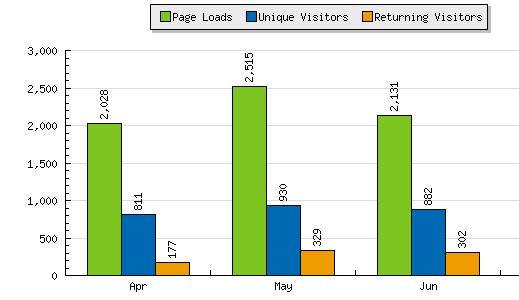
Site traffic in June was down slightly from that of May (see chart), confirming my suspicion that fewer people study the Explore the Bible Series in the summer. Nevertheless, the site remained roughly steady in returning visitors, which is a good.
Several ideas have been suggested such as make other bloggers aware of the site as well as more teachers (perhaps thru their minister of education). Bloggers are interactive and their participation will increase discussion on the site. Teachers like to make Bible lessons clear, interesting, and relevant.
If you have a blog or minister of education that we should contact, either leave a comment (using the comment link below) or send me an email at ronnieward [AT] yahoo.com.
Thanks!!
Have a great July 4 celebration. Remember, “blessed are the people whose God is the Lord.” Psalm 144:15b.
Saturday, July 01, 2006
Living for external, not temporal values
 In closing this lesson, “Analyze Your Actions”, I’m reminded that we are to “lose this life” and seek first the kingdom of God. According to Dr. Harry Leafe’s book Running to Win that means we are to live for eternal as opposed to temporal values.
I’d like you to add everyday examples of “How to live for God” using the comment link below. To get started consider these ideas:
1. In picking a vacation, select a place where you can also minister while you are visiting.
2. In deciding on a place to eat out, invite a widow, or a poor person to go with you.
3. When shopping for clothes, buy also for those who perform services for you (eg. lawn maintenance service, house cleaning service)
Your thoughts?
Friday, June 30, 2006
Defeat: agony or pleasure?
Step 5 of LifeWay lesson “Analyze Your Actions” draws the point from Job 31:29-30, 33-34 that Christians should not gloat or criticize others. Job was basically saying that taking pleasure in the mistakes of others and hypocritical behavior were not part of his life. Can we make Job’s claim?
 Experience suggests otherwise. In fact, we go so far as to hope that others stumble in order to gloat. Mistakes by others allow us to be even more jubilant and critical. For example, how do you react when a business competitor gets some bad press? What was your first thought when Martha was convicted? Lead the class in recalling examples of recent situations where trouble in the lives of others was looked upon with pleasure.
 Experience suggests otherwise. In fact, we go so far as to hope that others stumble in order to gloat. Mistakes by others allow us to be even more jubilant and critical. For example, how do you react when a business competitor gets some bad press? What was your first thought when Martha was convicted? Lead the class in recalling examples of recent situations where trouble in the lives of others was looked upon with pleasure.
Thursday, June 29, 2006
Dying to self
Well, we had 30 visitors to this site yesterday and 11 returning users, but no one chose to offer any help on Step 3. It’s hard to get a discussion going with you folks! Getting you to interact really has me stumped, especially when I consider the easy manner of discussion on blogs involving pastors (eg. Missional Baptist Blog and Fide-o).
Step 4 of LifeWay lesson “Analyze Your Actions” is based on Job 31:24-28, where Job introspectively asked if he had committed idolatry by worshipping wealth, or nature (sun or the moon). This reminds me of the ETB lesson “Worship No Other” from Isaiah 44:1-48:22, but the focus in the current lesson is different.
 Job sought to understand the cause of his trouble, but in effect said that he had not worshipped gold, or wealth, or the sun, or the moon. He was faithful to God. The LiefWay material uses the verses to question the connection of wealth to our “feelings of security.” Personally, these verses connect me to the question of “dying to self”.
Care to comment on where these verses take you as a teacher?
Step 4 of LifeWay lesson “Analyze Your Actions” is based on Job 31:24-28, where Job introspectively asked if he had committed idolatry by worshipping wealth, or nature (sun or the moon). This reminds me of the ETB lesson “Worship No Other” from Isaiah 44:1-48:22, but the focus in the current lesson is different.
 Job sought to understand the cause of his trouble, but in effect said that he had not worshipped gold, or wealth, or the sun, or the moon. He was faithful to God. The LiefWay material uses the verses to question the connection of wealth to our “feelings of security.” Personally, these verses connect me to the question of “dying to self”.
Care to comment on where these verses take you as a teacher?
Wednesday, June 28, 2006
Stumped
Based on Job 31:13-17, Step 3 of LifeWay lesson “Analyze Your Actions” focuses on avoiding arrogance and selfishness. Job was humble. He treated servants, the poor, and widows justly, and he also feared God.
I’m a bit stumped on how to challenge members to demonstrate these same qualities in their lives. Maybe some of you teachers who are reading this blog would be willing to share how you plan to approach this in your class?
I’m a bit stumped on how to challenge members to demonstrate these same qualities in their lives. Maybe some of you teachers who are reading this blog would be willing to share how you plan to approach this in your class?
Tuesday, June 27, 2006
On what to focus?
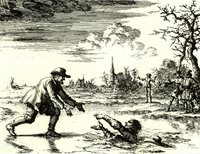 Step 2 of this week’s lesson “Analyze Your Actions” takes it main point from Job 31:5-6, 9-10. The focus in the LifeWay material is on the consequences of our actions, but what about the motivations? Read the story of Dirk Willems and call attention to his motivation in rescuing the pursuing guard. His compassion led him to do what was right, although the consequence was certain death.
When you “do what is right” are you more motivated by the potential consequences, or like Paul, are you motivated by the love of Christ? (2 Cor 5:14).
As a teacher what are you going to focus on in Job 31:5-6, 9-10?
Monday, June 26, 2006
Getting ready
 Continuing the search for the “why” behind his troubles, Job examines his personal actions for possible cause in Chapter 31. This week’s ETB lesson from LifeWay is entitled “Analyze Your Actions” is based on Job 29:1-31:40. The lesson encourages us to live according to godly ethics, which Job certainly did. This can be a good lesson. The key is to get people to think broad and deep to examine their behavior, their relationship to others, and to God. If dealt with on the surface, I suspect many will adopt an “I’m OK” position, and they will miss the opportunity provided by the lesson.
My suggestion is to open the class by reading 1 Corinthians 11:28 and observing the Lord’s supper (communion). By participating in the solemn act of remembering the Lord, class members will be in a frame of mind to understand Job’s words in Chapter 31.
Do you have another idea for opening this lesson?
Saturday, June 24, 2006
A wisdom choice
Tomorrow’s ETB lesson encourages us to “Look to God for wisdom.” An illustration for your class to consider is the issue of drinking. Steve McCoy and friends, addressing an issue of what he calls “divisive rhetoric”, make clear their knowledge that drinking is permissible (1 Cor 10:23-24). But missing from their discussion is anything regarding the wisdom of drinking. I don’t want to reduce God's kingdom to simply a matter of drinking (Rom 14:17), but I’m curious to know what their thinking is?
My conviction is that drinking in moderation is not a sin. Personally, I abstain because of alcoholism in my family history, to set an example for others (1 Cor 8:9), and for the glory of God (1 Cor 10:31).
What counsel would you give someone who asks you about the wisdom of drinking?
My conviction is that drinking in moderation is not a sin. Personally, I abstain because of alcoholism in my family history, to set an example for others (1 Cor 8:9), and for the glory of God (1 Cor 10:31).
What counsel would you give someone who asks you about the wisdom of drinking?
Friday, June 23, 2006
Pride or peace?
Scientific studies tell decision makers to “follow your gut”. Apprentice winner Sean Yazbeck advises, “Always go with your gut instinct.” To compete for Miss North Carolina, Brittany Akers learned to follow her gut.
“Follow your gut” is common advice. It may be called gut instinct, or an inner voice. It comes from human pride, or a degree of confidence that’s developed with life experience, but I wonder if it comes with peace, or does anxiety remain?
Speaking of Godly wisdom, Proverbs 3:17 says, “Her ways are pleasant ways, and all her paths are peace.” Conclude this week’s lesson “Look to God for Wisdom” by advising class members to seek wisdom from God first since He also gives peace.
“Follow your gut” is common advice. It may be called gut instinct, or an inner voice. It comes from human pride, or a degree of confidence that’s developed with life experience, but I wonder if it comes with peace, or does anxiety remain?
Speaking of Godly wisdom, Proverbs 3:17 says, “Her ways are pleasant ways, and all her paths are peace.” Conclude this week’s lesson “Look to God for Wisdom” by advising class members to seek wisdom from God first since He also gives peace.
Thursday, June 22, 2006
Now I understand!
 Where can we find wisdom? According to Zilda Arns Neumann, “Nature is the best source of wisdom.” But the Bible teaches in Proverbs 15:3 that, “The fear of the LORD teaches a man wisdom.” I define the fear of the Lord to be “an obedience alertness to God,” much like an attentive servant is ready at every moment to do his master’s will.
Step 4 of “Look to God for Wisdom” from Job 28:20-23,26-28, encourages us to seek God for wisdom. Job sought wisdom to understand his situation. Petanian understood his circumstance after studying the Bible.
Nature can teach us that God exists (Romans 1:20), but the mind of God, His Word, is revealed to us in the person of Jesus Christ (John 1:1-18). Hence, we can best learn the wisdom of God thru a personal relationship with Jesus. He gives us the Holy Spirit to teach us as we study the Bible, memorize it, and mediate on it.
As an exercise for this step, consider John 20:27-28 where Thomas became alert to the presence of God in the person of Jesus Christ. What was his wisdom response? In John 1:41, Andrew responded in wisdom to Jesus as God. What can we learn from Andrew regarding wisdom? Finally, in John 20:16-18, Mary responded after she recognized Jesus. What wisdom did she learn?
Wednesday, June 21, 2006
Worth more than we know
 Job 28:13,15-16 is the focal passage for Step 3 of “Look to God for Wisdom” from LifeWay’s Explore the Bible lesson series. Job describes wisdom’s invaluable worth. To express incalculable worth we say things like, “I can never pay you back,” or “I can’t say thank you enough.” Lessie Criss learned something from her grandfather that had incalculable value. What was it?
Two CMU students discovered something “worth more than money”. What wisdom did they learn? What made it so valuable?
We say, for example, that home, family and people are worth more than money, but wisdom is worth even more than these. What aspect of God makes wisdom from Him so valuable?
Exercising wisdom yields great benefits. Have members look up the following verses and name the benefits of Godly wisdom.
Happiness (Prov 3:13)
Life (Prov 3:18), longer life (Prov 9:11)
Protection (Prov 4:6)
Good judgment (Prov 8:12),
Repentance, salvation (Eccl 7:12)
Success (Eccl 10:10)
Peace (Prov 3:17)
Patience (Prov 19:11)
Prosperity (Prov 19:8)
Tuesday, June 20, 2006
I don’t know what to do!
 Step 2 of “Look to God for Wisdom” is taken from Job 28:1-4,12. Job writes about God’s wisdom, the treasure of it, and the difficulty of obtaining it. God made foolish the wisdom of the world (1 Cor 1:20). Man’s wisdom leads people away from God (Isa 47:10), and the Living God cannot be found through human wisdom (1 Cor 1:21).
The world’s wisdom is found in Movies, TV shows, Pop magazines, Self-help books, or cool Web Sites. Human reasoning can be obtained from self-promoting gurus, pundits, leading business people, and actors, sports figures, or life coaches. But they all have their limits, and like Calvin end up asking “What to do?”
Jane’s parents didn’t know what to do with Jane. Ask members if they have ever exclaimed, “I don’t know what to do!” You’ve reached your limit when you pick up the phone, turn on the TV, go to the bookstore, or find your Bible.
Use 2 Thes 1:6, Luke 6:31, 23:34, 1 John 4:16 and lead members to explain a true wisdom response in the following situations (as opposed to one using human reasoning).
1. A high-speed driver cuts in front of you on the freeway
2. Your basketball team lost the game because of a referee’s bad call
3. A co-worker takes credit for your work in a meeting with the boss
Monday, June 19, 2006
The song of wisdom after the fact
 There is certainly no lack of helps for this week’s Explore the Bible lesson from LifeWay, which encourages us to “Look to God for Wisdom” and is taken from Job 22:1-28:28. Due to the previous, similar Family Bible Study lessons from Job, you can find lesson commentary on “Look to God for Wisdom” from Mark Dunn, Wiley Richards, and Jim Perdue. Steve Armstrong offers a lesson plan. SonShine at Bible.org offers new study questions for the ETB lesson, as does Decatur Baptist. You can visit the links on the right side of this page to see lesson commentary from multiple sources—Florida, Mississippi, Tennessee, and Texas.
To get started, ask members, “How do you define wisdom?” and note their responses. Jim Dobson says that wisdom is seeing a matter from “God’s point of view.” How to get wisdom and follow it is the focus of this week’s lesson. Paul Simon says, “you do eventually get wisdom. But unfortunately it occurs too late.” I guess he also sings "the song of wisdom-after-the-fact".
Over the weekend, I commented on Scott Hill’s example of “Acknowledging that Life is Unfair” by noting that I see a difference between demonstrating knowledge and exercising wisdom. Yes, some people may conclude that Scripture allows for drinking, but you’d be hard pressed to argue that Scripture teaches that it’s wise to do it. And yes, I’m Southern Baptist, but I’m not mad about it.
Sunday, June 18, 2006
Page impact
Can someone describe the process (including author selection) which LifeWay uses to development Bible study materials such as the Explore the Bible series? Who are the key influencers? What committees are involved? Who would I talk that would explain the process?
I ask these questions since Nick Reddin, an SBC pastor posted a comment on this blog saying,
"I would like to see the boy's club dismantled for solid Godly leadership and solid teaching. I had to use the adult Lifeway material to teach my sixth graders and they still found it to lite. I ultimately had to take lifeway completely out of the Sunday School program for deeper material."
Given this "landmark moment" in the SBC, I'm wondering if someone can help me understand how the newly elected SBC president Dr. Frank Page could or should impact the process to develop LifeWay Bible study material? Understanding the current process used by LifeWay is a first step for me.
Saturday, June 17, 2006
Oh my!
As an example of “Acknowledging That Life Seems Unfair” in the church, read SBC pastor Scott Hill’s post “Blogging Changed the World”, which mentions being “fed a line of bull” as part of his SBC experience. He snaps at a generation of SBC leadership that only wanted a “LifeWay quarterly” (or should he have said, Sunday School Board?) and taught him extrabibilical ideas. This older generation is getting its due now. Justice is served.
If Scott’s experience is generally true, then we can expect this new generation of Baptist to castigate its prior leadership as it assumes control of the SBC and its member churches. The criticism seems a bit over the top. No one is without sin, but I pray that God’s purpose in allowing it is to ultimately increase baptisms.
If Scott’s experience is generally true, then we can expect this new generation of Baptist to castigate its prior leadership as it assumes control of the SBC and its member churches. The criticism seems a bit over the top. No one is without sin, but I pray that God’s purpose in allowing it is to ultimately increase baptisms.
Friday, June 16, 2006
Hmmm. Now that you say so...
Conclude Lifeway’s Explore the Bible lesson "Acknowledge That Life Seems Unfair" with the observation that everything that happens can be traced back to the omnipotent, omniscient God. Discuss with members the possible reactions to this thought-provoking fact.
In Behind a Frowning Providence, John Murray connects the dots from the “unknowable why” behind some suffering to the future glory to be revealed in heaven. I particularly liked his point that we get stuck in the disquieted, non-submissive state of second causes (ie. find someone, or something to blame), and fail to worship a God who is worthy of our sufferings.
When you have problems are you more interested in getting rid of them or in finding God’s purpose in allowing them?
P.S. Read Marty Duren’s blog about the factors influencing the outcome of the upset voting at the recent Southern Baptist Convention meeting in Greensboro, N.C. His comments about the role of blogging interest me since I blog (here).
In Behind a Frowning Providence, John Murray connects the dots from the “unknowable why” behind some suffering to the future glory to be revealed in heaven. I particularly liked his point that we get stuck in the disquieted, non-submissive state of second causes (ie. find someone, or something to blame), and fail to worship a God who is worthy of our sufferings.
When you have problems are you more interested in getting rid of them or in finding God’s purpose in allowing them?
P.S. Read Marty Duren’s blog about the factors influencing the outcome of the upset voting at the recent Southern Baptist Convention meeting in Greensboro, N.C. His comments about the role of blogging interest me since I blog (here).
Thursday, June 15, 2006
Avoid getting on the wrong track
 Lifeway’s Explore the Bible lesson "Acknowledge That Life Seems Unfair" takes its last point (Step 4) from Job 21:7-9. Job’s perspective is limited by his personal experience. Man’s wisdom leads to wrong conclusions about God when compared with the truth as revealed in the Bible. Thank God that we have His written word! Remember Proverbs 17:15: Acquitting the guilty and condemning the innocent—the LORD detests them both.
This passage teaches us to avoid getting our faith in God on the wrong track based on human reasoning. It should not be based on personal judgments about the prosperity of others (or lack thereof). Instead, our faith should depend on God as revealed to us in Scripture by the Holy Spirit.
What is the foundation of your faith in God? Is it personal experience? Church services? Creation? Power of God revealed in Scripture? See 1 Cor 2:4-5. Is your faith in God, or something else?
Wednesday, June 14, 2006
Say it ain't so...
 Step 3 of "Acknowledge That Life Seems Unfair" is from Job 16:19-21; 19:5-6, 25-27. Job lost the argument with his friends even though he was right. Notice in this piece how the writer comes to the defense of a candidate. Job’s friends “knew they were right” and refused to come to his defense. Ask members to recall a time when they defended someone else. How did they know they were right?
P.S. Are you a left brained, or right brained teacher? I tend to be a lefty.
Tuesday, June 13, 2006
I hate it when that happens
 Step 2 of Explore the Bible lesson "Acknowledge That Life Seems Unfair" is from Job 15:5-6, 9-10, 20. Demonstrating that life is not fair, Job’s friends misjudged him. He found no comfort in their presence. We misjudge others when they don’t see a situation the same way as we do, or we consider ourselves superior in some way, or stereotype people based on appearance without complete information.
When we misjudge others we cut off the work of the gospel in their lives. For example, misjudging someone as “weak” when in fact they have deep pain and hurt causes us to not to share the comfort that can be found in God. The gospel as expressed in our lives is cut off because of our wrong judgment. To further illustrate, consider that when we misjudge someone as “lazy” when they simply lack direction in life, we fail to share God’s holy purpose with them and thus, cut off the Holy Spirit working thru us.
Show a clip from the movie Hoodwinked and have members identify how others are misjudged in the clip. Is Granny a “granny”? The big bad wolf really "bad"? You get the idea.
Ask members to recall someone they know that turned out to be very different from that of their first impression.
Monday, June 12, 2006
It's not fair
 Dean Oldford complains, “It’s not fair” in “Stolen catches anger crab fishermen”. Based on his comments, I don’t think he studied the LifeWay lesson “Acknowledge That Life Seems Unfair” from Job 15:1-21:34. However, based on Liliana Ake’s comments in LaPorte Prays for Hostage, she may have learned the lesson aim to place our trust in God when life seems unfair.
We know that life is not fair, but why do we have a sense in the first place that life should be fair? One explanation in Metaphors for Life is that we are taught early on to view life as a courtroom where everything is done in a fair way. Ask members, “Similarly, how can we learn to have hope when life seems unfair?”
Sunday, June 11, 2006
Any photographers out there?
 I like to use photos because it helps visual learners. Blair Howard has a photo contest each week (unrelated to this blog), but what if we used his rules and had a photo contest related to each week's lesson? For example, this week's lesson is "Acknowledge That Life Seems Unfair" from Job 15:1-21:34. Our topic this week would be "It's not fair!". Entries have to be posted by Thursday each week as a blog comment. Winning photo announced on Saturday. What do you think? Would that be fun?
Saturday, June 10, 2006
Funeral song
What song do you want sung at your funeral? Can you say why?
I like We Rest on Thee by Edith G. Cherry because it has a grand ending.
I like We Rest on Thee by Edith G. Cherry because it has a grand ending.
Friday, June 09, 2006
Looking back
 Step 5 of “Carefully Evaluate Explanations” is based on Job 13:15,18,23-24, which highlights Job’s attitude that God made a mistake, or that God was hiding. According to this piece, God made a mistake in allowing Aimee to die. Similarly, this article quotes an individual saying, “God made a mistake” in allowing her friend to die. Phillip Yancy put out a video, When God is Hiding, which would be interesting to play and discuss in the class.
Ask members to personally identify a time when they experienced their greatest life change. Ask them to characterize, “How was God involved in your life and in that change at the time?” Ask members what they would have to believe about God (or not know) to truly think God made a mistake.
Thursday, June 08, 2006
Get your facts straight
Step 4 of “Carefully Evaluate Explanations” warns us not to make false assumptions to explain suffering as Job’s friend Zophar did in Job 11:6b, 13-15; 13:4. It occurred to me that we sometimes learn best (or most) when we make mistakes. Can you recall a time when you made a wrong assumption, took some action, or made some conclusion about another person, and then learned a life lesson when you found out that you were mistaken? See Proverbs 12:18.
Recall the adage, “Fools rush in where angels fear to tread.” Show current article headlines and ask members to quickly make a decision about the contents of the article. This should cause members to demonstrate how we are quick to make judgments without knowing the facts.
Recall the adage, “Fools rush in where angels fear to tread.” Show current article headlines and ask members to quickly make a decision about the contents of the article. This should cause members to demonstrate how we are quick to make judgments without knowing the facts.
Wednesday, June 07, 2006
Say What?
 Step 3 of “Carefully Evaluate Explanations” challenges us not to accept foolish thinking offered as explanations for life’s difficulties as Job’s friends offered him (Job 8:4-8). Pick out the foolish statements in the examples that follow. Discuss the basis of the belief behind the statement.
Kenny left the airport (where he worked) around noon for a lunch meeting. Driving in a hurry around a sharp turn he ran his Yukon off the road and flipped it. He was a good driver. He never even had a ticket, but he was speeding to make that meeting. I can only guess that God needed him more than his wife Judy and the kids, but it's been a very painful time for them. I pray Kenny’s death will help others realize they need to slow down. God bless everyone.
Patient says life is good if you get help, listen to doc: [Wray] works at a Cass Corridor dog day-care business and volunteers at Wags, a group that helps people with HIV who have pets. He said of his future living with AIDS: "I don't think it's going to take me right away. I believe only the good die young. ... I'm gonna be here forever."
There is another angel in heaven today watching over you and he's okay. Know that Sonny will always be with you. I will pray for comfort, joy and happiness to return in your life in the days ahead. Sonny was a wonderful testimony to how people should live. Love in Christ.
So Close to Tragedy: ONLY unarguable blind luck stopped rugby league plunging into desperate grieving today. Another centimetre or so and six players would be in wheelchairs, their careers and more importantly their lives, as broken as their necks. What happened last weekend was carnage. It was a despicable disregard by players for the welfare of their colleagues and stunningly ignored the truism: "What goes around comes around."
Tuesday, June 06, 2006
Everything happens for a reason
 Step 2 of “Carefully Evaluate Explanations” focuses on ‘justice’ as the reason terrible events occur in one’s life (see Job 4:6-7; 6:2-3, 24). Instead, consider giving a mini lecture based on how suffering is explained and asking into which category does ‘justice’ fall. Ask members to think of a cliche responses that correspond to 'justice' done ("he/she got what he deserved").
Ask members for example situations of where they would attribute ‘justice’ (retribution) as the cause of bad things happening. Here are some examples from the news:
Sick (see comment post by Sick down in the article)
Kember got what he deserved
Bibek Moitra ruined our family
Pierzynski pays price for bad reputation
Monday, June 05, 2006
Feelings are like true, but hard to explain
 This week’s LifeWay Explore the Bible lesson “Carefully Evaluate Explanations” is basically a repeat from the Family Bible Study last Fall. Steve Armstrong offers a complete lesson plan. Jim Perdue, Catherine Painter, and Wiley Richards offer commentaries that may be useful to you.
SonShine offers her study questions online, which are a big help if you’ll forward them to members!
Have you ever asked your class members what they do to prepare for Sunday’s lesson? What were their responses?
I just finished reading Blue Like Jazz, by Don Miller. Even though it starts out like a great read, in the end, it left me Blue Like Fad—as in chasing a fad disappoints. I can’t think of a reason to recommend it. It was not inspiring, and I’m too old to become cool like Don. You might feel cool though. It could be for you, but being judged by an intellectual has never been fun. I felt sad for him in a way, his dad having skipped out and all. Maybe that explains the double standards, but I can’t explain my reaction, except it just seems true.
Saturday, June 03, 2006
Keys to a right response
 To conclude this week’s lesson “Respond with Faith”, ask members what spiritual discipline holds the key to unlocking faith when life takes a bad turn? One article suggests that the answer is prayer. But is it disciplined Bible reading, praise and worship, or Christian fellowship? Review the focal verses and summarize how both God and Job responded to Satan’s challenge. We learn to trust God and worship and praise Him.
I praise the Lord that this blog ministry continues to grow in unique and returning users (see chart bellowing comparing April and May produced by Statcounter, the site I use to track usage).
Based on private email from a few readers, I know the blog helps teachers prepare in some way, even if it only contributes one idea that the Holy Spirit uses to help Christians learn to apply the Bible personally.
However, no one comments on the blog publicly. This is unusual given its reasonable traffic level.
This makes me wonder what it is about teachers that make them unwilling participants?
Of course, I'd appreciate any thoughts you have.
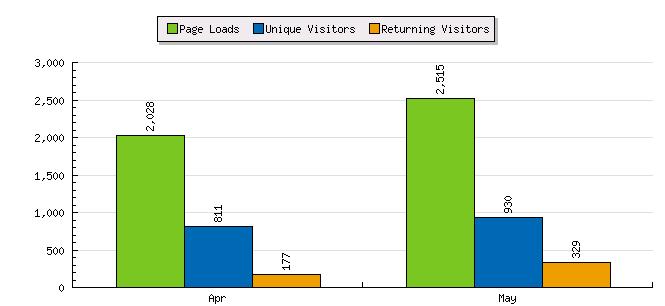
Friday, June 02, 2006
If it doesn't kill you...
 The focal verses for Step 5 of LifeWay’s Explore the Bible lesson “Respond with Faith” jump from Job’s response to Satan’s initial attack in Job 1:20-22 to Satan’s attack on Job’s health in Job 2:7, and finally to Job’s wife’s response in Job 2:9-10.
These are the ‘money’ verses since they record Job’s response to the tragedies in his life—he worshipped, praised and witnessed—and in summary, the writer of Job indicates Job did not sin or blame God throughout the whole ordeal. If we had no other verses from Job than these, we’d have enough to learn how to respond when our lives take a bad turn.
Yesterday, while trying to backup my wife’s PC, I accidentally put the hard drive out of commission. Yikes! I don’t want to tell you how I responded. Day before yesterday I over did it rehabbing a sore knee (had arthroscopy a couple of weeks ago). Given the self-caused pain, swelling and loss of sleep, I don’t want to tell you how I responded!
But my examples are trivial compared to the type of life changing events that really test one’s faith. Put up the statement, “It’s said that, ‘If it doesn't kill you, it makes you stronger.’” Ask members to discuss the statement. Ask how they think Job was made stronger. Do you believe God purposed you to praise Him in the midst of your trials? Check out this rock idea for “what tests your faith?”.
For some reason the Holy Spirit brought 1 Cor 10:13 to mind. Isn’t God good?!
Thursday, June 01, 2006
God's character
 The focal verses for Step 4 of LifeWay’s Explore the Bible lesson “Respond with Faith” are Job 1:9-11. God is supreme over Satan, who insinuates Job is faithful only because God blesses him. Satan insults God, implying that God ‘pays’ for Job’s faithfulness. Job is not serving for “nothing”. Take away God’s blessings and Job will curse God. Doesn’t God already know the answer to this challenge? So why does God give the response in verse 12?
What does the interaction in these verses tell you about God? Yes, He is supreme even over evil, but God knows the outcome of Satan’s work in advance (Satan does not since he is not all knowing). What does it say about God that He would take an insult like this from Satan and not smoke him right then and there?
Yes, God is slow to anger (Exod 34:6). Being “slow to anger” is right and true since that is what God is. It follows that we should not be quick tempered (Proverbs 14:17, 1 Corinthians 13:4-5, James 1:19-20). When you are challenged, how do you respond? When bad things happen in your life do get angry as a first response, or do you demonstrate faith?
Discuss these verses with class members and ask them to learn from God character how to be more Christ-like. How can we learn to adopt God’s view of a situation and not rely only on our own perspective?
Subscribe to:
Posts (Atom)


 Posts
Posts


