Thursday, January 19, 2006

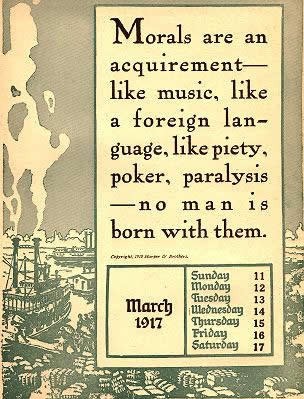
Learn by example, mistake, or reading about it

Step 4 of LifeWay’s Leader Guide summarizes Romans 13:12b-14 as “Exhibit High Morals” in the context of the lesson “Live as a Godly Neighbor”. The so-called emerging church focus on narrative has led some adherents to conclude that Biblical morality is secondary to its narrative revelation of God. They say the Bible has been turned into a rulebook to the detriment of its relationship story between God and man. If you read Romans 13:12b-14 alone and out of context does the Bible sound like a rulebook to you? If so, what other passages would you include in your reading to make sure that the narrative story of God relating to man is not lost?

The Leader Guide suggests changing a dirty, worn shirt for a clean shirt as an object lesson. You could change a dirty, soiled shirt on a doll instead. Psychologists say that a child at age 2 can learn to put clothes on, so how long does it take for a Christian to learn to put on Christ?

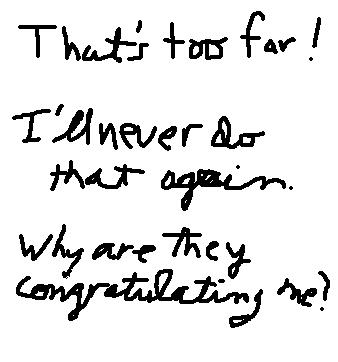
Can you recall a lesson you learned from making a mistake?

Wednesday, January 18, 2006

How to rate your neighbor

I ran across a McCall’s magazine article “Whatever Happened to Neighbors?” published in September 1968. It could have been written today. To prepare for Step 3 (Rom. 13:8-10) of the lesson “Live as a Godly Neighbor”, read the article and list the factors leading to a decline in neighboring. The LifeWay Leader Guide summarizes this step as “Treat Others Right”. Contrast the commands and truth found in Romans 13:8-10 with the contents of the article and decide how a lack of neighboring leads to not treating others right.

Tuesday, January 17, 2006

How are we doing?

According to the LifeWay outline the main point in Step 2 (Rom. 13:1-7) of the lesson “Live as a Godly Neighbor” is to be a good citizen. Knowing that God instituted all government to control evil, we either submit out of fear of its wrath, or remain in good conscience by being obedient. So good citizens vote, pay taxes, obeys the laws, respects government officials and even honors them. Sounds good, but using these requirements, how would you rate yourself as a citizen?

How do you rate others? Here is one take on how residents rate business citizenship. Being genuine is important. This applies on an individual level, too. While many of us rate well performing the requirements Paul described, our attitude in doing so is not stellar.

The LifeWay Leader Guide asks some good questions (see pages 86 and 87). In which of the requirements Paul lists do we need to experience heart change? For example, do we genuinely honor all government officials? If we learn that we do not, can we readily change and start doing so?

Monday, January 16, 2006

Live as a Godly Neighbor (Rom. 13:1-10,12b-14)

To prepare, there is lot’s to read every week besides the lesson passage from the Bible. Right? What do you read? What have you read lately that really made a difference in the way you live as a citizen, neighbor, or resident?

Read this article and listen for how University Temple church defines “Good neighbor”? Based on the article, what actions have they taken that are not only good, but also godly? How do you define “good neighbor”? Is it the traditional “one neighbor helping another”?

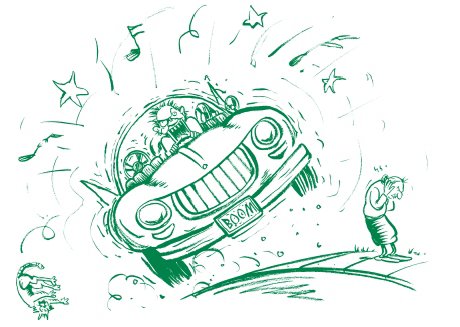
Drivers of Boom Cars are NOT good neighbors by design. I’ve heard a few on our local streets that I’d like to smash. Is that desire an indicator that I need this lesson? What other neighbor peeves come to your mind?

Saturday, January 14, 2006

Inspiration

The Hampton Road lesson plan (link content changes each week—sorry) for “Live in Respect” suggests leading off the lesson by playing the opening scene of the movie Fried Green Tomatoes. I think you can play this preview and get a better effect. Discuss how the preview relates to aging, the elderly, and friendship.

Friday, January 13, 2006

Stakeholders

Step 5 of “Live in Respect” is based on 1 Timothy 5:1-2 and some intriguing questions come to mind. How would you describe your relationship with people 15-20 years older than you? Is it God-honoring? Do you seek relationships with older people, or not? Why? Focus on the Family materials for help with older family members are very useful. The article “Don’t act your age” offers some great maxims.

Timothy was “in the ministry”, so he had a stake in the success of his local congregation. But even if God does not call us as “ministers”, we have a stake in the success of the local church. We are all called to serve using the gifts with which He has blessed us. Do you view yourself as a stakeholder in the success of your church’s ministry to older adults?


P.S. If you are interested, an alternative to AARP is NASCON.

Thursday, January 12, 2006

Respect decisions of the elderly

Step 4 of “Live in Respect” is tough. Based on 2 Samuel 19:37-39, David seemed to readily accept Barzillai’s decision to return to his own city. However, it’s not so easy for us to accept decision making (especially in some key areas) of elderly people in our lives. Why is that?

What does research say about decision making of the elderly compared to younger people? Here is a quote from the conclusion (p.11) of the paper Aging and Decision Making:

“We conducted four sets of experiments using 50 high functioning neurologically healthy older subjects (average age 82) and 51 healthy students (average age 20). …The general conclusion is that the [decision making] performance of the two groups of subjects is remarkably similar. …The distribution of responses shows that older individuals more frequently respond that they are completely certain (100%) or completely unsure (50%) than do the younger subjects. These results support the view that older individuals have more accurate beliefs about their knowledge and its limitations.”

Okay, so they are no worse in decision making than young people, but how should we respond when they make unwise decisions, such as participate in gambling, or driving well beyond their reaction time abilities? Here is video highlighting the problem of gambling among the elderly.

The LifeWay Adult Extra has an interesting quote by General Douglas MacArthur, which I won’t repeat here. Also, the LifeWay quarterly (p. 79) asks an interesting question regarding end-of-life decisions. I find it difficult to discuss these issues with my Mother, for example. Do you also have a problem talking to your parents about some of their decisions? Maybe I could write her and put my concerns in a letter? What do you recommend?

Wednesday, January 11, 2006

Challenge

Step 3 of the lesson “Live in Respect” is based on 2 Samuel 19:31-36. David demonstrated care for his 80-year-old friend. Read and discuss the verses, but also read and discuss the following article: Many 'reluctant to care for old'.

One way we can demonstrate care for the elderly is participate as a class in the Adopt a Nursing Home program. Read about participation of the Pilot Club of Longview, or the Dogwood Ladies of Jacksonville.

If your class does not want to accept the challenge of Adoption, how about simply setting a goal to visit a local nursing home as a class. My guess is that the visitors will be the ones most blessed! Brainstorm with members what activities to engage in with the elderly. What to talk about, or not?

Tuesday, January 10, 2006

Fear the Lord; He is God


Step 2 of this week’s lesson “Live in Respect” is based on Leviticus 19:32. Recent comments related to coach Joe Paterno being an old man give ample illustrations of how the elderly are dishonored in our society. Evidently the problem is not just in the USA, but disrespect of the elderly exists in third world countries, too.


On the flip side, this humorous reminder to respect the elderly is interesting. So is Miss Abigail’s advice on Manners with Old People. You won’t have a problem listing specific ways to honor older people. The issue is that most of us won’t take the time to do so. Why is that? Better we should take Solomon’s wisdom: “… Fear God, and keep his commandments: for this is the whole duty of man” (Eccl. 12:13).

By the way, how do you define an old person? It used to be anyone over 30. Now it’s anyone 20 years older than me. If you need evidence that we want to hang on to our youth, look at these cosmetic surgery stats from 2003 when 8.3 million procedures were performed.

Monday, January 09, 2006

Live in respect

This week’s LifeWay lesson “Live in Respect” teaches us to demonstrate sanctity for human life by showing respect to older people. The lesson is based on several Old and New Testament verses, but other religions and cultures also teach respect for elders. So the challenge is to understand that we are not only to respect elders, but why from God’s perspective. For example, Confucianism teaches respect for elders because they build bridges to the traditions of the past, but for what Godly reasons should Christians respect elders?

Six Flags uses and old guy “Mr. Six” to advertise its theme parks. It’s counterintuitive. Old people don’t have fun; therefore Mr. Six gets your attention. Ad success.

How else does modern society stereotype older people? Make a list on a marker board as members call out examples.


–complaining, confused, cranky, feeble, forgetful, senile, poor drivers, slow, incompetent, disabled, vulnerable, humorless

+ accomplished, active, alert, dignified, distinguished, knowledgeable, successful, wise

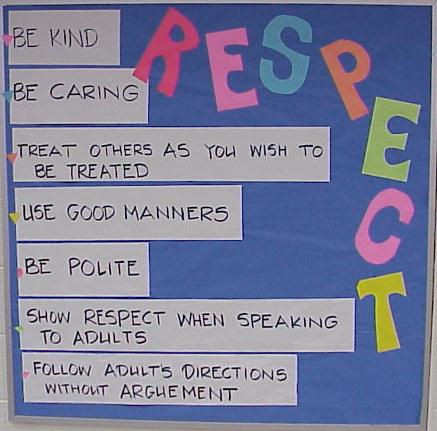
Ask what does the word “respect” mean? See if you can complete an acrostic using the letters r-e-s-p-e-c-t in each line.

•R- regard, right
•E- esteem, encourage
•S- supporting, helpful
•P- polite, patience
•E- express admiration
•C- caring, courteous
•T- thoughtful, tolerant

Friday, January 06, 2006

Well, to be honest…

Step 5 of “Live in Love” is based on Romans 12:17-21. Holman CSB translates verse 17 as “try to do what is honorable in everyone’s eyes.” Does this mean we should try to please everyone? Rick Warren says 'no' in his piece “How to please everyone”. For a humorous treatment of how to please everyone, read this piece by Dennis Crawford.

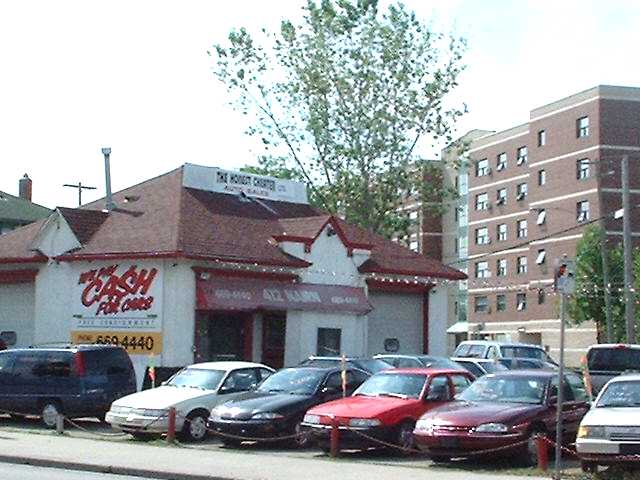
In the divided culture of today, what is honorable (honest) in everyone’s eyes? How have you seen honesty demonstrated in the church? At work? Elsewhere? Was it demonstrated ‘in love’? A humorous comic highlights the difference. Do you use the phrase “to be honest…” in your speech? Why? Is honesty always the best policy? I like the photo of the “Honest Cheaters” used car dealer. Lastly, you could discuss why Abe Lincoln was called “Honest Abe.”

Ask class members to phrase an epitaph they would like written on their tombstone based on any verse from Romans 12:9-21.

Thursday, January 05, 2006

That’s what I’m talk’n about

Paul wrote in Romans 12:2 that the mind of Christian should be renewed. For step 4 of the lesson “Live in Love”, emphasize that Paul offers in verses 12:14-16 clear examples of what he meant by being transformed.

How has your thinking been transformed when it comes to pride, cursing, or gloating? Developing a mindset of humility, or the practice of blessing an enemy, or expressing empathy truly demonstrates the transformation of ugliness (evil) into beauty (able to discern the perfect will of God in daily living).

Wednesday, January 04, 2006

Puzzle time

For step 3, which is based on Romans 12:10-13, try using a crossword puzzle maker to create a puzzle that members can work after reading the designated verses. You’ll need to create a word and clue list. For example, the word honor could have respect as its clue. The final puzzle should have no more than 7 words to make it short and sweet.

Tuesday, January 03, 2006

Sticking to the good

Step 1 of this week’s lesson focuses on Romans 12:9 and teaches love must be genuine. Science explains religious beliefs as springing from innate dualism present at birth, which is extrapolated to societal altruism in adulthood. Romans 1:19 explains the first idea, and Romans 12:9 explains the second. Expressing hypocritical love is an exercise of Darwinian selfishness, but genuine love springs from a personal relationship with the Living God, whose love for us surpasses knowledge (Ephesians 3:14-21). Do you know “how wide, how long, how high, and how deep his love really is?”

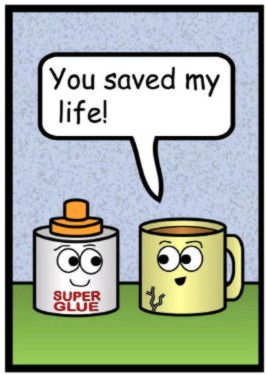
Super glue yourself to the Word of God. I’d use only the first panel of this cartoon on a PPT slide and discuss examples of where super glue (or any kind of glue) came to the rescue. Afterwards, ask members to explain how love is promoted by sticking to what’s good.

Monday, January 02, 2006

Promoting love

To prepare for this week’s LifeWay lesson “Live in Love” based on Romans 12:9-21, I reviewed the context set in Romans 11 (see “Concern of God” lessons ending on December 17th with Magnetic Group). Since God is patient and loving, it only makes sense that to please God, Christians should become living sacrifices and be transformed by the renewing of their minds.

A renewed mind humbly sees the world from God’s perspective and as a result, patiently loves others. This week’s focus is to teach living to please God by learning to live in love of others.

As Americans, we value knowledge, which we know can lead to pride, elitism, and condescension. We take the risk, however, since education generally leads to greater success in society. We fund public education, provide for advanced college degrees and pay for expert advice.

On the other hand, Jesus taught the greatest command is to love God, and the second to love others. So I asked, what have we done to promote ‘living in love’ in our society? If love of God and others is to be highly valued, we surely must provide for teaching and practicing it. Right? Ask members how are we doing that in our society? Try not to focus on how we are NOT doing it! That’s an easier discussion.

Thursday, December 29, 2005

Past, present, future

To close this lesson “Live in Worship” based on Romans 12:1-8, ask members to recall a time when they served God and others. Ask how it made them feel afterwards? Can they identify what spiritual gift they exercised? Do they still possess that same spiritual gift today? Can we lose a spiritual gift? Can we change spiritual gifts?

When was the last time you changed your mind about some matter? Did you do it as a result of seeing it from God’s perspective? Has this lesson changed your mind in any way?

We can stay in the past or we can move ahead in the future by dedicating ourselves to serve God and others using the spiritual gifts given us. Will you change your mind today and follow God? Encourage someone today about his or her past, present and future with the Lord!

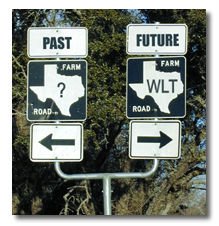
Notice the WLT in the pictured sign. Puzzle out with the class a summary thought based on this lesson. For example, Worship Living Transformed.

Wednesday, December 28, 2005

Serving others helps avoid pride

For this step “use your gifts,” based on Romans 12:4-8, in the lesson “Live in Worship”, Paul teaches proper motivation for using diverse spiritual gifts by way of analogy to a functioning body that has many parts. The nut of verse 3 is that we avoid pride by serving others. Verses 4-8 names representative gifts that we use in service to others. In Romans 1:11-12, Paul wanted to use his spiritual gifts to encourage the Christians in Rome.

After covering these verses, discuss with members how serving others using our God given gifts help us not to think more highly of ourselves. If every believer has a God given spiritual gift, why doesn’t every believer use his or her gift in service? Can a gift be exercised in a wrong way?


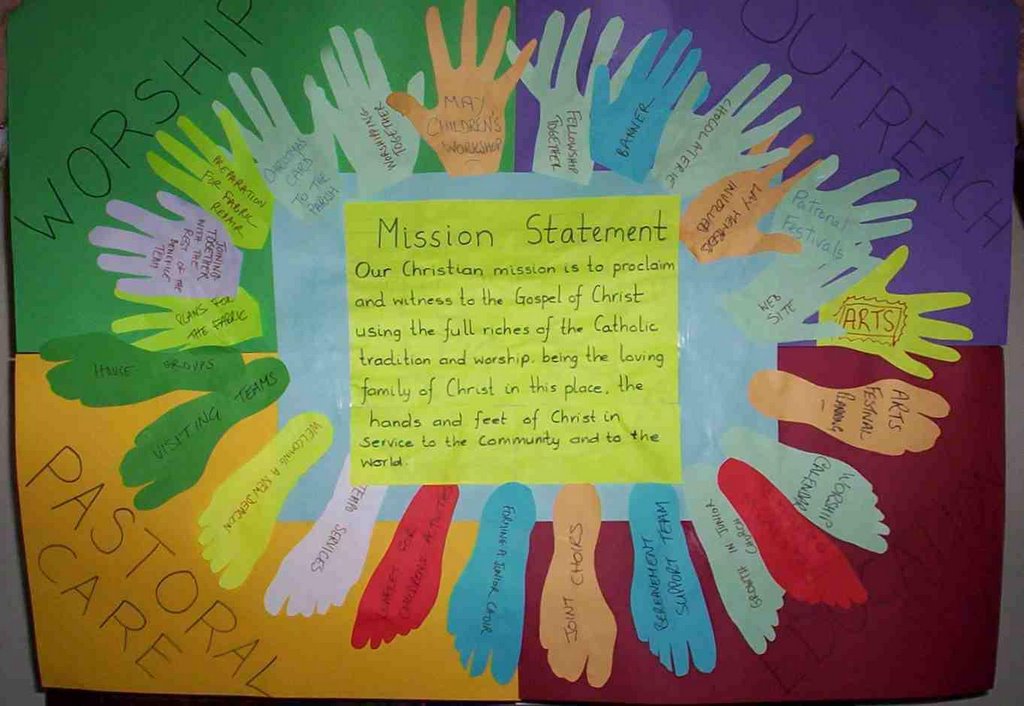
Look at this poster board made with hands and feet that are labeled with acts of service. Could you lead your class to make such a board?

Regarding the ‘body’, note that God did not create the body to be served, but to serve using its various members. By the way, what gifts did you get as Christmas presents?

Tuesday, December 27, 2005

Not conformed, but transformed

I’ve mentioned that creating tension is a means for gaining interest in the classroom. For Romans 12:2-3, the verses comprising the next step in this lesson “Love in Worship”, John Piper creates tension in the following text:

“How does the command not to be conformed to this world relate to Paul’s statement in 1 Corinthians 9:22, “I have become all things to all people, that by all means I might save some”? How is becoming all things to all people not conforming to the world? Or how does the command not to conform to the world, that is, to be counter-cultural, relate to Paul’s words in 1 Corinthians 10:32-33? “Give no offense to Jews or to Greeks or to the church of God, just as I try to please everyone in everything I do, not seeking my own advantage, but that of many, that they may be saved.” How does not being conformed to the world fit with not giving offense to the world? You can’t always do both. How does not being conformed to the world fit with pleasing everyone for the sake of salvation?”

Use Piper’s article as a basis for discussing Romans 12:2-3. The idea of ‘transformation’ can be illustrated with the caterpillar/butterfly example, the transformer toy example, or by the character Scully from the popular X-Files show of a few years ago. Scully started the series as an antagonistic, spying skeptic on partner Mulder, but by the end of the series, she was a full-fledged believer in the X-Files. Although the illustration is offbeat it does illustrate the idea Paul had in mind that transformation is a repeated process of changing one’s mind to see matters from a Godly perspective.

Monday, December 26, 2005

Need to serve

I find the Study questions for Romans 12:1-8 from bible.org very helpful. We previously commented on Romans 12:1 noting that serving God is only logical in view of His mercy. The study guide, however, makes the point that service is a “need” we have. In other words, there is a gap in lives that cannot be filled unless we worship God thru service to Him and others. Do you believe this? Ask members to comment on why this is so. I was praying out loud once and our pastor was present. I mentioned in the prayer "our need to serve" to which he said "amen" during the prayer. It made an impression on me and reenforced the point in my mind that we do have a God given need to worship God by serving Him.

Take a look at the Lifeway Adult Bible Extra since it makes a couple of helpful suggestions regarding Step 1 of this lesson “Live in Worship.”