Tuesday, May 23, 2006

Matchless God of Wonder

Step 2 of “Praise Our Incomparable God” is based on Micah 7:8-10. Notice the following progressions in these verses:

(1) Judahite: fallen > sits > stands

(2) Babylonian: gloats > covered > trampled

(3) The Lord: lights > rages > brings


Match the following selected words from the same passage to their associated places in the correct progressions above.

(1) Sinned, Endures, Looks, (2) Says, Shamed, Sees, (3) Argues, Establishes, Saves

After doing so, point out the incomparability of the Lord's actions relative to the Judahites and Babylonians. Ask members to select one of the actions of the Lord that has personal meaning in their life. Lead the class in a brief time of prayer praising God for taking action member's lives.

P.S. Considering sending an ecard to your class members today praising God.

Monday, May 22, 2006

Incomparable God

In a 2002 survey of Protestant church congregants, George Barna found that only 2% thought that “praising God” was the most important worship outcome. This coupled with 1 Peter 2:9 indicates that we need to learn to “Praise Our Incomparable God”, which is the LifeWay lesson this week based on Micah 7:8-20. SonShine at Bible.org provided study questions for the lesson that you can distribute to members in advance.

About halfway down in this article there are some helpful tips on learning to praise God, but I laughed at this Rat’s Tale of learning to praise God.

Consider having members read the focal passage and select what verse they consider to be the key verse (I like verse 18) that best encourages praise to God—the lesson aim. Jot down their answers and tally the one with the largest number of votes. Discuss how this particular verse encourages praise to God. Consider leading the class to memorize it.

An alternative is to put up a collage of pictures of items, places, or people that are supposedly incomparable (Google incomparable images). Ask “Are they truly incomparable in the sense that they cannot be compared with anything else in all creation?” The answer is no, and the claim of incomparability is more hype than reality. State that this lesson will help us learn to praise God because He truly is incomparable.

Saturday, May 20, 2006

Grand Canyon

This week I returned from a 13-day rafting, camping and hiking trip in the Grand Canyon led by Drs. Steve Austin and Andrew Snelling from the Institute for Creation Research. The trip was organized Tom and Paula Vail of Canyonministries.com, and they contracted with Arizona River Runners to pull off a great experience.

After a couple of days of orientation sessions, about 30 new found friends put in at Lee’s Ferry (mile 0), and over the next nine days and nights we had loads of fun, great adventure and motivating Bible study before reaching our helicopter take point at mile 187. Here are a few of the hundreds of photos I took on the trip.

You might think it was all about running the river, shooting the rapids and enjoying the spectacle of the Grand Canyon, but the trip also included strong research and educational components. Great hikes bouldering in the side canyons ended in finding nautiloids, examining Day 3 rock, seeing the Great Unconformity up close, and observing an Indian archeological site.

In camp, the music was wonderful (check out Take Me to The River), the food was excellent, and sleeping out under the stars was unbeatable. The Bible studies were very inspiring and the friends I made were very encouraging.

Have you ever thought about the Grand Canyon’s creation from a Biblical perspective, or have you bought into the uniformitarian view of process formation over billions of years?

In 2 Peter 3:3-7, Peter wrote about a time when people would deliberately forget the Creator. Don’t make that mistake. Jesus turned water to wine instantly, healed the sick at a spoken word, and cast out demons by fiat. Accept Jesus as Creator as well as Lord and Savior.

If you’d like more discussion, send me email at ronnieward AT yahoo.com.

Friday, May 19, 2006

Summary exercise

Check out “Get Real” lesson commentary by Lori Clendinning from First Church, Brandon, MS. Good overall summary.

To conclude the lesson, let the Holy Spirit work to change lives by having members first re-read the focal passages (Isaiah 58:3-14; Micah 6:6-8), and then have them select the best summary teaching from the following list (or make up your own list).

1. Showing devotion to God in religious services is not as important as serving others outside the church.

2. It is foolish to do evil and also think that religious acts are acceptable to the Lord. Joy in the Lord and prayers are answered following righteous living.

3. True fasting is to abstain from evil and meet the needs of others. The Lord blesses true fasting with answered prayers, healing and renown witness.

4. Blessing and joy in the Lord, His guidance and healing and renown witness accompany righteous living and humble service to others.

5. God blesses when evil deeds are forsaken and replaced with service to others.

Thursday, May 18, 2006

The way to go

Step 4 of “Get Real” is founded on Isaiah 58:13-14. Reading the verses makes me think the Israelites might have had wrong intentions, but nevertheless, they were going about worshipping God the wrong way. Their agenda and focus got between them and God, so their worship was ineffectual. It’s like a football receiver who decided on his own to run a pass route different from what the coach called and then wondered why the quarterback didn’t throw him the ball. Disobedience does not lead to a happy life.

Use an illustration Jesus gave (Matt 5:14-16) and take a flashlight and a bowl to class. Turn the flashlight on and then cover it with the bowl. Make the point that the light from the flashlight affects only what’s inside the bowl--much like we do when we don’t venture outside the church in service to others.

Wednesday, May 17, 2006

Action illusion

Westside Baptist of Jacksonville posted their lesson plan for “Get Real”. I like its “walk the talk” angle. Step 3 of the LifeWay plan emphasizes actions to achieve “other focused service”. The key Bible verses are Isaiah 58:6-12; Micah 6:8. All of these urge Christians to avoid an illusion of action and really help others.

Tuesday, May 16, 2006

Showing up is only the first step

A demonstration of selfishness as an expression of devotion to God is illustrated in Step 2 of “Get Real” from Isaiah 58:3-5. It comes from a complaining, prideful people who EXPECT blessings from God on the basis of performing religious acts. Like a stage actor, they expect to be rewarded for performing, or like an employee who expects a raise just because he/she simply shows up. Showing up is only a first step.

Monday, May 15, 2006

La la land

To introduce this week’s lesson, “Get Real” based on Isaiah 58:3-14; Micah 6:6-8, read quotes from this article regarding “unrealistic expectations”. After some discussion, ask for examples of how we also have unrealistic expectations in the ways we demonstrate our devotion to God.

The challenge this week is to demonstrate our devotion to God by getting out of the pew and meeting the needs of someone else. This will take us out of our comfort zone and test our faith, prove our character and equip us with an experience to use in comforting others.

Saturday, May 13, 2006

Encourage members by reminding them

Conclude “Accept God’s Free Offer” by challenging members not to fall victim to human reasoning that limit’s God offer of abundant life. To do this, I recommend reminding members of Peter’s last words in 2 Peter 1:15-2:3.

On another note, I thank God for how He continues to bless usage of this site. The StatCounter results for April again show a good increase over what happened in March.

Friday, May 12, 2006

The joy of the Lord

Step 5 of “Accept God’s Free Offer”, based on Isaiah 55:12-13, has mountains singing, trees clapping, and pine trees and myrtle growing in place of thorn bushes and briers. All illustrate the incredible joy creation will display when Israel returns to the Lord. The master of banquet fell victim to uniformitarian reasoning when he didn’t seek the Creator. As unbelievable as it might be according to human reasoning, the everlasting Lord will cause the mountains to sing, and the trees to clap when He expresses His joy at Israel’s return to Him.

Thursday, May 11, 2006

The one way, or the other


For Step 4, refer to last week’s lesson “Recognize God’s Ways” for more material to use in discussing the difference in God’s ways verses man’s ways (Isaiah 55:8-11).

Wednesday, May 10, 2006

Come on back

For lack of time this week I’m reluctantly sticking with the LifeWay teaching plan for “Accept God’s Free Offer.” Step 3 is based on Isaiah 55:6-7. When the text says, “return” in verse 7, does that imply the wicked and sinful once worshipped the Lord and now only need to get back to where they belong? Does this text apply to a Christian going backwards, or to a lost person who has never confessed faith in the Lord?

Tuesday, May 09, 2006

Glorified? Can that be true?

I use Step 2 suggested in the LifeWay Leader guide (p.114) to focus on verses Isaiah 55:1-5, although you may want to have your mock salesman read from the Message paraphrase instead.

Are you skeptical of a “free offer”? Why? You might want to discuss opportunities that sound too good to be true.

Monday, May 08, 2006

A special for sure

I don’t particularly like LifeWay’s suggestion to use a “sales” situation to characterize the choice to accept the Lord as God. Do you? Nevertheless, for lack of time this week, I plan to use Step 1 in the Leader Guide (p. 113) to introduce this week’s Explore the Bible lesson, “Accept God’s Free Offer,” from Isaiah 55:1-13. To get men more involved, discuss why “Favre's sales pitch not good enough” failed.

Saturday, May 06, 2006

My sheep hear my voice

Step 6 concludes “Recognize God’s Ways” by considering God’s present work in the lives of class members. Is someone in the class currently mistreated, or suffering? Is God’s hand discernable in the situation? Based on this lesson, how do you recognize God’s ways in the situation? Can you recognize the voice of Jesus?

Friday, May 05, 2006

Godly rewards

Step 5 of “Recognizing God’s Ways” calls for us to understand that God rewards faithful service. Based on Isaiah 53:10-12, this last point underscores the major blessings the Servant receives from God. Do you believe God will reward a Christian’s faithfulness? How so?

Christians identify with Christ through baptism, which symbolizes His death, burial and resurrection. Will they be rewarded in some way other than knowing God and experiencing eternal life with Him?

According to Bobby Welch, North American Mission Board, the New Testament indicates five things that seem to be grounds for heavenly rewards:

1) Soul winning (see 1 Thess. 2:19)
2) The love of Jesus’ second coming (see 1 Tim. 4:8)
3) Enduring trials (see Jas. 1:12)
4) Victory over the old nature (see 1 Cor. 9:25)
5) Feeding the flock (see 1 Pet. 5:4)

Also, James McCullen, pastor Liberty Baptist Church, discusses the five crowns promised in the Bible. Take time to send an email to Jim thanking him for posting his sermon text on-line.

Thursday, May 04, 2006

Unjust suffering

Step 4 of “Recognize God’s Ways” is based on Isaiah 53:7-9 and emphasizes that “God may use undeserved suffering” as a means to reach people. Jesus also suffered unjustly as an example for us according to 1 Peter 2:21-24. Read Genesis 39-40 to see how Joseph suffered unjustly as an illustration of God’s ways.

When we suffer unjustly (say from false accusation), we can better identify with Christ by growing more like Him. John Piper explains How to Suffer for Doing What is Right. Take note of his discussion of 1 Peter 2:19 to explain why one is able to bear unjust suffering.

Cover the following simple True/False quiz taken from here.

T F You should never try to escape from unjust suffering (Luke 4:28-30; Acts9:23-25, 28-30. Also Matthew 2:13-15; Acts 12:6-11, 23:1-10)

T F God intends any suffering you experience and does not want to pray for or seek escape from it. (Psalm 109:21-31; 116:1-11; Matthew 26:39, 41.)

T F You may always seek to know what purpose God might have for your suffering. (Proverbs 16:4; John 15:15.)

T F There is no such thing as unjust suffering; you are a sinner, so you deserve your suffering. (Matthew 2:16, Luke 13:1-5, John 15:18-19, 2Timothy 3:13.)

Wednesday, May 03, 2006

Surprising means

Step 3 of “Recognize God’s Ways” asserts that “God may use unexpected means” to reach us. Incredibly, according to Isaiah 53:4-6, the “arm of the LORD” was purposely sacrificed. Man’s ways intended harm, but God used the result to bring salvation to many (Genesis 50:20).

Write the word altruism in large letters and ask members what the word means. What is the give and what’s the gain in this “give to gain” situation, or this one? Can you identify sacrifices made by others (they willing give up something they value) for your benefit? A parent? A friend? A co-worker? A doctor? A nurse? A peace officer? Make a list of the sacrifices (objects of value) as members call them out.

Idle question: would you give up a kidney to save the life of someone you love?

Tuesday, May 02, 2006

Surprising people

Step 2 asserts that “God may use the unlikely” in teaching us to learn to “Recognize God’s Ways”. Based on Isaiah 53:1-3, Jesus was incorrectly judged as an unlikely Servant because of wrong expectations. Consider illustrating this using the wrong expectations people had of Jesus as presented in Luke 4:21-32.

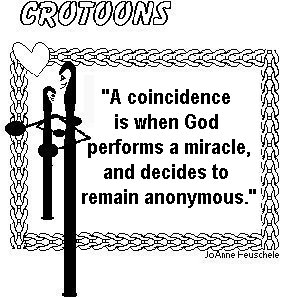
Think about how an encounter with an unexpected person can surprise us? Do you think it was a coincidence? Did God, a family member, a co-worker, or a complete stranger last surprise you? What do you think of this Mother Theresa Story?

Think of someone has inspired you with qualities you admire and wish you had. Is God working in your life thru that person? Considering creating a class appreciation tree identifying such people for members of your class.

Monday, May 01, 2006

Distinctive ways

The LifeWay Explore the Bible lesson for May 7 is "Recognize God's Ways". Covering Isaiah 43:1-53:12, the lesson passage comes from Isaiah 53:1-12. While there are many life applications in the background passage, LifeWay chose the lesson title and aim to fit in the broader unit theme of Finding Hope in God’s Greatness.

This week’s lesson is about recognizing God’s distinctive ways, His ways of acting to accomplish His purposes. To introduce the lesson show this video of a comic imitating President Bush (avoid political discussion). Ask members to identify the subtle signature moves the comic makes to help the audience recognize that he is imitating the President.

As you read Isaiah 53 in its entirety ask members to contemplate the subtle, distinctive ways of God revealed in the passage. Have members call these out examples and make a list on a marker board. Afterwards, read Isaiah 55:8.