 Experience suggests otherwise. In fact, we go so far as to hope that others stumble in order to gloat. Mistakes by others allow us to be even more jubilant and critical. For example, how do you react when a business competitor gets some bad press? What was your first thought when Martha was convicted? Lead the class in recalling examples of recent situations where trouble in the lives of others was looked upon with pleasure.
Friday, June 30, 2006
Defeat: agony or pleasure?
Step 5 of LifeWay lesson “Analyze Your Actions” draws the point from Job 31:29-30, 33-34 that Christians should not gloat or criticize others. Job was basically saying that taking pleasure in the mistakes of others and hypocritical behavior were not part of his life. Can we make Job’s claim?
 Experience suggests otherwise. In fact, we go so far as to hope that others stumble in order to gloat. Mistakes by others allow us to be even more jubilant and critical. For example, how do you react when a business competitor gets some bad press? What was your first thought when Martha was convicted? Lead the class in recalling examples of recent situations where trouble in the lives of others was looked upon with pleasure.
Experience suggests otherwise. In fact, we go so far as to hope that others stumble in order to gloat. Mistakes by others allow us to be even more jubilant and critical. For example, how do you react when a business competitor gets some bad press? What was your first thought when Martha was convicted? Lead the class in recalling examples of recent situations where trouble in the lives of others was looked upon with pleasure.


Thursday, June 29, 2006
Dying to self
Well, we had 30 visitors to this site yesterday and 11 returning users, but no one chose to offer any help on Step 3. It’s hard to get a discussion going with you folks! Getting you to interact really has me stumped, especially when I consider the easy manner of discussion on blogs involving pastors (eg. Missional Baptist Blog and Fide-o).
Step 4 of LifeWay lesson “Analyze Your Actions” is based on Job 31:24-28, where Job introspectively asked if he had committed idolatry by worshipping wealth, or nature (sun or the moon). This reminds me of the ETB lesson “Worship No Other” from Isaiah 44:1-48:22, but the focus in the current lesson is different.
 Job sought to understand the cause of his trouble, but in effect said that he had not worshipped gold, or wealth, or the sun, or the moon. He was faithful to God. The LiefWay material uses the verses to question the connection of wealth to our “feelings of security.” Personally, these verses connect me to the question of “dying to self”.
Care to comment on where these verses take you as a teacher?
Step 4 of LifeWay lesson “Analyze Your Actions” is based on Job 31:24-28, where Job introspectively asked if he had committed idolatry by worshipping wealth, or nature (sun or the moon). This reminds me of the ETB lesson “Worship No Other” from Isaiah 44:1-48:22, but the focus in the current lesson is different.
Job sought to understand the cause of his trouble, but in effect said that he had not worshipped gold, or wealth, or the sun, or the moon. He was faithful to God. The LiefWay material uses the verses to question the connection of wealth to our “feelings of security.” Personally, these verses connect me to the question of “dying to self”.Care to comment on where these verses take you as a teacher?
Wednesday, June 28, 2006
Stumped
Based on Job 31:13-17, Step 3 of LifeWay lesson “Analyze Your Actions” focuses on avoiding arrogance and selfishness. Job was humble. He treated servants, the poor, and widows justly, and he also feared God.
I’m a bit stumped on how to challenge members to demonstrate these same qualities in their lives. Maybe some of you teachers who are reading this blog would be willing to share how you plan to approach this in your class?
I’m a bit stumped on how to challenge members to demonstrate these same qualities in their lives. Maybe some of you teachers who are reading this blog would be willing to share how you plan to approach this in your class?
Tuesday, June 27, 2006
On what to focus?
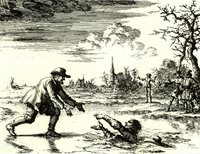 Step 2 of this week’s lesson “Analyze Your Actions” takes it main point from Job 31:5-6, 9-10. The focus in the LifeWay material is on the consequences of our actions, but what about the motivations? Read the story of Dirk Willems and call attention to his motivation in rescuing the pursuing guard. His compassion led him to do what was right, although the consequence was certain death.
When you “do what is right” are you more motivated by the potential consequences, or like Paul, are you motivated by the love of Christ? (2 Cor 5:14).
As a teacher what are you going to focus on in Job 31:5-6, 9-10?
Monday, June 26, 2006
Getting ready
 Continuing the search for the “why” behind his troubles, Job examines his personal actions for possible cause in Chapter 31. This week’s ETB lesson from LifeWay is entitled “Analyze Your Actions” is based on Job 29:1-31:40. The lesson encourages us to live according to godly ethics, which Job certainly did. This can be a good lesson. The key is to get people to think broad and deep to examine their behavior, their relationship to others, and to God. If dealt with on the surface, I suspect many will adopt an “I’m OK” position, and they will miss the opportunity provided by the lesson.
My suggestion is to open the class by reading 1 Corinthians 11:28 and observing the Lord’s supper (communion). By participating in the solemn act of remembering the Lord, class members will be in a frame of mind to understand Job’s words in Chapter 31.
Do you have another idea for opening this lesson?
Saturday, June 24, 2006
A wisdom choice
Tomorrow’s ETB lesson encourages us to “Look to God for wisdom.” An illustration for your class to consider is the issue of drinking. Steve McCoy and friends, addressing an issue of what he calls “divisive rhetoric”, make clear their knowledge that drinking is permissible (1 Cor 10:23-24). But missing from their discussion is anything regarding the wisdom of drinking. I don’t want to reduce God's kingdom to simply a matter of drinking (Rom 14:17), but I’m curious to know what their thinking is?
My conviction is that drinking in moderation is not a sin. Personally, I abstain because of alcoholism in my family history, to set an example for others (1 Cor 8:9), and for the glory of God (1 Cor 10:31).
What counsel would you give someone who asks you about the wisdom of drinking?
My conviction is that drinking in moderation is not a sin. Personally, I abstain because of alcoholism in my family history, to set an example for others (1 Cor 8:9), and for the glory of God (1 Cor 10:31).
What counsel would you give someone who asks you about the wisdom of drinking?
Friday, June 23, 2006
Pride or peace?
Scientific studies tell decision makers to “follow your gut”. Apprentice winner Sean Yazbeck advises, “Always go with your gut instinct.” To compete for Miss North Carolina, Brittany Akers learned to follow her gut.
“Follow your gut” is common advice. It may be called gut instinct, or an inner voice. It comes from human pride, or a degree of confidence that’s developed with life experience, but I wonder if it comes with peace, or does anxiety remain?
Speaking of Godly wisdom, Proverbs 3:17 says, “Her ways are pleasant ways, and all her paths are peace.” Conclude this week’s lesson “Look to God for Wisdom” by advising class members to seek wisdom from God first since He also gives peace.
“Follow your gut” is common advice. It may be called gut instinct, or an inner voice. It comes from human pride, or a degree of confidence that’s developed with life experience, but I wonder if it comes with peace, or does anxiety remain?
Speaking of Godly wisdom, Proverbs 3:17 says, “Her ways are pleasant ways, and all her paths are peace.” Conclude this week’s lesson “Look to God for Wisdom” by advising class members to seek wisdom from God first since He also gives peace.
Thursday, June 22, 2006
Now I understand!
 Where can we find wisdom? According to Zilda Arns Neumann, “Nature is the best source of wisdom.” But the Bible teaches in Proverbs 15:3 that, “The fear of the LORD teaches a man wisdom.” I define the fear of the Lord to be “an obedience alertness to God,” much like an attentive servant is ready at every moment to do his master’s will.
Step 4 of “Look to God for Wisdom” from Job 28:20-23,26-28, encourages us to seek God for wisdom. Job sought wisdom to understand his situation. Petanian understood his circumstance after studying the Bible.
Nature can teach us that God exists (Romans 1:20), but the mind of God, His Word, is revealed to us in the person of Jesus Christ (John 1:1-18). Hence, we can best learn the wisdom of God thru a personal relationship with Jesus. He gives us the Holy Spirit to teach us as we study the Bible, memorize it, and mediate on it.
As an exercise for this step, consider John 20:27-28 where Thomas became alert to the presence of God in the person of Jesus Christ. What was his wisdom response? In John 1:41, Andrew responded in wisdom to Jesus as God. What can we learn from Andrew regarding wisdom? Finally, in John 20:16-18, Mary responded after she recognized Jesus. What wisdom did she learn?
Wednesday, June 21, 2006
Worth more than we know
 Job 28:13,15-16 is the focal passage for Step 3 of “Look to God for Wisdom” from LifeWay’s Explore the Bible lesson series. Job describes wisdom’s invaluable worth. To express incalculable worth we say things like, “I can never pay you back,” or “I can’t say thank you enough.” Lessie Criss learned something from her grandfather that had incalculable value. What was it?
Two CMU students discovered something “worth more than money”. What wisdom did they learn? What made it so valuable?
We say, for example, that home, family and people are worth more than money, but wisdom is worth even more than these. What aspect of God makes wisdom from Him so valuable?
Exercising wisdom yields great benefits. Have members look up the following verses and name the benefits of Godly wisdom.
Happiness (Prov 3:13)
Life (Prov 3:18), longer life (Prov 9:11)
Protection (Prov 4:6)
Good judgment (Prov 8:12),
Repentance, salvation (Eccl 7:12)
Success (Eccl 10:10)
Peace (Prov 3:17)
Patience (Prov 19:11)
Prosperity (Prov 19:8)
Tuesday, June 20, 2006
I don’t know what to do!
 Step 2 of “Look to God for Wisdom” is taken from Job 28:1-4,12. Job writes about God’s wisdom, the treasure of it, and the difficulty of obtaining it. God made foolish the wisdom of the world (1 Cor 1:20). Man’s wisdom leads people away from God (Isa 47:10), and the Living God cannot be found through human wisdom (1 Cor 1:21).
The world’s wisdom is found in Movies, TV shows, Pop magazines, Self-help books, or cool Web Sites. Human reasoning can be obtained from self-promoting gurus, pundits, leading business people, and actors, sports figures, or life coaches. But they all have their limits, and like Calvin end up asking “What to do?”
Jane’s parents didn’t know what to do with Jane. Ask members if they have ever exclaimed, “I don’t know what to do!” You’ve reached your limit when you pick up the phone, turn on the TV, go to the bookstore, or find your Bible.
Use 2 Thes 1:6, Luke 6:31, 23:34, 1 John 4:16 and lead members to explain a true wisdom response in the following situations (as opposed to one using human reasoning).
1. A high-speed driver cuts in front of you on the freeway
2. Your basketball team lost the game because of a referee’s bad call
3. A co-worker takes credit for your work in a meeting with the boss
Monday, June 19, 2006
The song of wisdom after the fact
 There is certainly no lack of helps for this week’s Explore the Bible lesson from LifeWay, which encourages us to “Look to God for Wisdom” and is taken from Job 22:1-28:28. Due to the previous, similar Family Bible Study lessons from Job, you can find lesson commentary on “Look to God for Wisdom” from Mark Dunn, Wiley Richards, and Jim Perdue. Steve Armstrong offers a lesson plan. SonShine at Bible.org offers new study questions for the ETB lesson, as does Decatur Baptist. You can visit the links on the right side of this page to see lesson commentary from multiple sources—Florida, Mississippi, Tennessee, and Texas.
To get started, ask members, “How do you define wisdom?” and note their responses. Jim Dobson says that wisdom is seeing a matter from “God’s point of view.” How to get wisdom and follow it is the focus of this week’s lesson. Paul Simon says, “you do eventually get wisdom. But unfortunately it occurs too late.” I guess he also sings "the song of wisdom-after-the-fact".
Over the weekend, I commented on Scott Hill’s example of “Acknowledging that Life is Unfair” by noting that I see a difference between demonstrating knowledge and exercising wisdom. Yes, some people may conclude that Scripture allows for drinking, but you’d be hard pressed to argue that Scripture teaches that it’s wise to do it. And yes, I’m Southern Baptist, but I’m not mad about it.
Sunday, June 18, 2006
Page impact
Can someone describe the process (including author selection) which LifeWay uses to development Bible study materials such as the Explore the Bible series? Who are the key influencers? What committees are involved? Who would I talk that would explain the process?
I ask these questions since Nick Reddin, an SBC pastor posted a comment on this blog saying,
"I would like to see the boy's club dismantled for solid Godly leadership and solid teaching. I had to use the adult Lifeway material to teach my sixth graders and they still found it to lite. I ultimately had to take lifeway completely out of the Sunday School program for deeper material."
Given this "landmark moment" in the SBC, I'm wondering if someone can help me understand how the newly elected SBC president Dr. Frank Page could or should impact the process to develop LifeWay Bible study material? Understanding the current process used by LifeWay is a first step for me.
Saturday, June 17, 2006
Oh my!
As an example of “Acknowledging That Life Seems Unfair” in the church, read SBC pastor Scott Hill’s post “Blogging Changed the World”, which mentions being “fed a line of bull” as part of his SBC experience. He snaps at a generation of SBC leadership that only wanted a “LifeWay quarterly” (or should he have said, Sunday School Board?) and taught him extrabibilical ideas. This older generation is getting its due now. Justice is served.
If Scott’s experience is generally true, then we can expect this new generation of Baptist to castigate its prior leadership as it assumes control of the SBC and its member churches. The criticism seems a bit over the top. No one is without sin, but I pray that God’s purpose in allowing it is to ultimately increase baptisms.
If Scott’s experience is generally true, then we can expect this new generation of Baptist to castigate its prior leadership as it assumes control of the SBC and its member churches. The criticism seems a bit over the top. No one is without sin, but I pray that God’s purpose in allowing it is to ultimately increase baptisms.
Friday, June 16, 2006
Hmmm. Now that you say so...
Conclude Lifeway’s Explore the Bible lesson "Acknowledge That Life Seems Unfair" with the observation that everything that happens can be traced back to the omnipotent, omniscient God. Discuss with members the possible reactions to this thought-provoking fact.
In Behind a Frowning Providence, John Murray connects the dots from the “unknowable why” behind some suffering to the future glory to be revealed in heaven. I particularly liked his point that we get stuck in the disquieted, non-submissive state of second causes (ie. find someone, or something to blame), and fail to worship a God who is worthy of our sufferings.
When you have problems are you more interested in getting rid of them or in finding God’s purpose in allowing them?
P.S. Read Marty Duren’s blog about the factors influencing the outcome of the upset voting at the recent Southern Baptist Convention meeting in Greensboro, N.C. His comments about the role of blogging interest me since I blog (here).
In Behind a Frowning Providence, John Murray connects the dots from the “unknowable why” behind some suffering to the future glory to be revealed in heaven. I particularly liked his point that we get stuck in the disquieted, non-submissive state of second causes (ie. find someone, or something to blame), and fail to worship a God who is worthy of our sufferings.
When you have problems are you more interested in getting rid of them or in finding God’s purpose in allowing them?
P.S. Read Marty Duren’s blog about the factors influencing the outcome of the upset voting at the recent Southern Baptist Convention meeting in Greensboro, N.C. His comments about the role of blogging interest me since I blog (here).
Thursday, June 15, 2006
Avoid getting on the wrong track
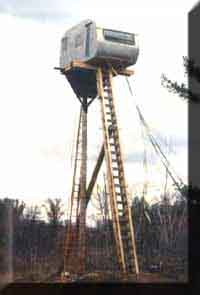 Lifeway’s Explore the Bible lesson "Acknowledge That Life Seems Unfair" takes its last point (Step 4) from Job 21:7-9. Job’s perspective is limited by his personal experience. Man’s wisdom leads to wrong conclusions about God when compared with the truth as revealed in the Bible. Thank God that we have His written word! Remember Proverbs 17:15: Acquitting the guilty and condemning the innocent—the LORD detests them both.
This passage teaches us to avoid getting our faith in God on the wrong track based on human reasoning. It should not be based on personal judgments about the prosperity of others (or lack thereof). Instead, our faith should depend on God as revealed to us in Scripture by the Holy Spirit.
What is the foundation of your faith in God? Is it personal experience? Church services? Creation? Power of God revealed in Scripture? See 1 Cor 2:4-5. Is your faith in God, or something else?
Wednesday, June 14, 2006
Say it ain't so...
 Step 3 of "Acknowledge That Life Seems Unfair" is from Job 16:19-21; 19:5-6, 25-27. Job lost the argument with his friends even though he was right. Notice in this piece how the writer comes to the defense of a candidate. Job’s friends “knew they were right” and refused to come to his defense. Ask members to recall a time when they defended someone else. How did they know they were right?
P.S. Are you a left brained, or right brained teacher? I tend to be a lefty.
Tuesday, June 13, 2006
I hate it when that happens
 Step 2 of Explore the Bible lesson "Acknowledge That Life Seems Unfair" is from Job 15:5-6, 9-10, 20. Demonstrating that life is not fair, Job’s friends misjudged him. He found no comfort in their presence. We misjudge others when they don’t see a situation the same way as we do, or we consider ourselves superior in some way, or stereotype people based on appearance without complete information.
When we misjudge others we cut off the work of the gospel in their lives. For example, misjudging someone as “weak” when in fact they have deep pain and hurt causes us to not to share the comfort that can be found in God. The gospel as expressed in our lives is cut off because of our wrong judgment. To further illustrate, consider that when we misjudge someone as “lazy” when they simply lack direction in life, we fail to share God’s holy purpose with them and thus, cut off the Holy Spirit working thru us.
Show a clip from the movie Hoodwinked and have members identify how others are misjudged in the clip. Is Granny a “granny”? The big bad wolf really "bad"? You get the idea.
Ask members to recall someone they know that turned out to be very different from that of their first impression.
Monday, June 12, 2006
It's not fair
 Dean Oldford complains, “It’s not fair” in “Stolen catches anger crab fishermen”. Based on his comments, I don’t think he studied the LifeWay lesson “Acknowledge That Life Seems Unfair” from Job 15:1-21:34. However, based on Liliana Ake’s comments in LaPorte Prays for Hostage, she may have learned the lesson aim to place our trust in God when life seems unfair.
We know that life is not fair, but why do we have a sense in the first place that life should be fair? One explanation in Metaphors for Life is that we are taught early on to view life as a courtroom where everything is done in a fair way. Ask members, “Similarly, how can we learn to have hope when life seems unfair?”
Sunday, June 11, 2006
Any photographers out there?
 I like to use photos because it helps visual learners. Blair Howard has a photo contest each week (unrelated to this blog), but what if we used his rules and had a photo contest related to each week's lesson? For example, this week's lesson is "Acknowledge That Life Seems Unfair" from Job 15:1-21:34. Our topic this week would be "It's not fair!". Entries have to be posted by Thursday each week as a blog comment. Winning photo announced on Saturday. What do you think? Would that be fun?
Saturday, June 10, 2006
Funeral song
What song do you want sung at your funeral? Can you say why?
I like We Rest on Thee by Edith G. Cherry because it has a grand ending.
I like We Rest on Thee by Edith G. Cherry because it has a grand ending.
Subscribe to:
Posts (Atom)


 Posts
Posts

