Friday, October 13, 2006

Perfect = mature

To close this lesson on “Live in Hope,” I want to tie back to last week’s lesson “Determine to Mature.” That is, encourage members to apply the certain hope of Jesus’ superior priesthood to enabling Christians to grow in maturity, which was the issue the Hebrew Christians faced.

After reading about and studying the overall context of 7:19 (see 6:1 and 6:3), the idea of perfection referring to maturity seems admissible. The LifeWay Bible Commentary on Hebrews is silent (p 77), while the Adult Leader Guide (p 77) clearly interprets perfection as referring to salvation, not maturity. On the other hand, Dwight Pentecost’s A Faith that Endures (p 124) understands perfection as referring to maturity. Without being dogmatic about it, I think I can mention both ideas and then focus on the maturity aspect.

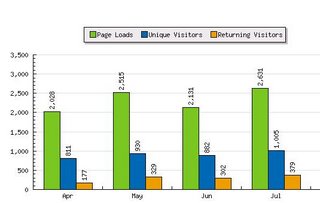
In my rush, I forgot to publish last month's traffic and visitor update. It follows below. God is good!

Thursday, October 12, 2006

Secure hope

Step 4 of “Live in Hope” highlights the secure nature of the hope God has set before us: Jesus’ priesthood is forever (see verse 28 in the passage Hebrews 7:23-28). He declared by oath that our redeemer Jesus Christ, who lives forever, continuously performs the priestly duty of interceding for us (prays for our protection, our sanctification, and our unity with each other and Him). God cannot change His mind. He does not lie.

There is no greater security than the hope God offers in Jesus Christ. Our hold (belief that God does not lie) on this hope (Jesus Christ) is like an unbreakable chained tied to an immoveable anchor. Taking off on yesterday’s “bent can” illustration, we select the 'perfect' can because we trust it, whereas who knows what we’ll get if we rely on a damaged can.

I may use the illustration of a tent stake since I tent camp. The stake is below ground and I can’t see it work, but in a high wind, it does its job of keeping the tent secure.

Wednesday, October 11, 2006

Damaged goods

Step 3 of “Live in Hope” draws its point from Hebrews 7:15-22, skipping the first 14 verses of Hebrews 7. We’ve all seen a grocery store place damaged items on sale. The items are marred in some way and consumers simply won’t buy them at full price even though the contents are still okay. To illustrate the main idea in Step 3, let members choose from a set of sample items (some of which are damaged) and see which ones they select. Afterwards, ask, "when it comes to choosing between the hope offered in Christ verses that offered by some other means, why would you settle for damaged goods?"

Does this illustration make sense to you?

Tuesday, October 10, 2006

Why should we be patient?

The Lord’s will for us is to live under the influence of the Holy Spirit, and by practice train our senses to distinguish good and evil. God allows our maturity to be tested and our failure can bring disappointment. Living out the Word of God in our lives will bring maturity, but it is discouraging when we move backwards like the Hebrew Christians. Do you ever get impatient and frustrated at your lack of progress toward spiritual maturity? If so, take heart in what the writer of Hebrews has to say.

Believers have faith in Christ, but we need the patience of Abraham mentioned in Hebrews 6:15-20, the focal verses for Step 2 of this week’s lesson “Live in Hope”. We can have patience for the same reason Abraham did. God cannot lie! What He has promised is true already and “set before us” for the taking.

The writer of Hebrews encourages us to grasp and hold on to this hope: Jesus has already entered God’s presence and as our High Priest, His sacrifice enables us to enter God’s presence in heaven. What a glorious day that will be! Our spiritual maturity will come, God willing, with patient endurance.

Monday, October 09, 2006

Live in Hope

The background passage for this week’s lesson “Live in Hope” is Hebrews 6:13-7:28. The Hebrew Christians were not mature and needed milk instead of solid food. In this passage, the writer hands them a “spiritual turkey leg” to chew on as he discusses the priesthood of Jesus and Melchizedek. He certainly left behind the elementary teachings and moved on to more mature matters about Christ!!

If you search Google news using the phrase “live in hope” you’ll notice right away that it’s used as an idiom, i.e. as a peculiar way to express an optimistic outlook. Make you a top ten list from the examples. Start by asking members to: Complete the sentence “I live in hope for _________________,” then show your list. Introduce the lesson noting that we live in hope because of Jesus’ priesthood.

Thursday, October 05, 2006

Determine to grow in maturity

This lesson “Determine to Mature” closes with Hebrews 6:9-12. Verse 9 is an encouraging word since the writer expresses his confidence in the Hebrew Christians.

Verse 10 is clear evidence that salvation is not the focus of chapter 6 since the writer more than anyone understands salvation is by faith, not works. However, Christians do work in service to build up the body of Christ (Eph 4:11-16). The writer wants them to be diligent as they were in the beginning, and not become lazy in their service to Christ.

We all have stories of receiving generally bad customer service at some time or another. Remind members of this and ask, “What is the cause of such poor service?” After listening and noting their responses, make the comparison that God wants Christians to bear “fruit” and not “thorns.”

Christians are not to be lazy and uncaring, but to be diligent and faithful so as to grow in maturity. You might want to show a picture of a puzzle and ask members, “What’s missing that would help you determine to grow in maturity?”

Wednesday, October 04, 2006

And the results are...?

Step 3 tackles verses 6:1-8 in Hebrews with a focus on warning immature believers of their need to grow beyond basic teachings about Jesus Christ. They need to “Determine to Mature”, or risk losing earthly blessings, or heavenly rewards (see this post also).

It’s interesting to note that these Fan’s Pay No Attention to Warnings. The question is will we heed the warning we read in Hebrews 6:4-6?

Verses 7-8 illustrate that “consuming” God’s blessing has two outcomes—one is good, the other is evil. Ask members to consider the results of God’s manifold blessings in their lives today. Are the results good, or evil?

Tuesday, October 03, 2006

Determine to Mature

This week’s lesson, “Determine to Mature” speaks personally to all of us since God’s will for us is to grow in maturity (cf. Eph 4:11-16). We need maturity to properly deal with the focal verses in chapter 6.

Step 2 of the lesson starts with Hebrews 5:11-14. I’m amazed at the relationship between the writer of Hebrews and his immature Christian Hebrew readers. Mind you they were adults, but he had the freedom to speak very bluntly to them as children: “you have become slow to understand.” (see also v12).

Can you imagine saying that to adults today? Feeling insulted, most would up and leave after an insinuation let alone such a direct statement. He said the Hebrew Christians “have become slow” implying they are regressing. That it, these Christians were once quick learners and grew fast, but now they are going backwards.

To illustrate this regression, J. Dwight Pentecost in his book “A Faith That Endures” likens the Hebrew Christians to adults that have put on children clothes. Maybe we could show a photo of an adult dressed as a child and ask what’s wrong with this picture?

Wednesday, September 27, 2006

Slammed

Due to unforeseen demands on my time, I will be unable to post again this week. Please take advantage of all the links on the right side of the page to very helpful lesson commentaries.

God bless all of you, and don't start any fights while I'm out!
Ronnie

Tuesday, September 26, 2006

Speak freely

Step 2 of “Seek Forgiveness” is taken from Hebrews 4:14-16. Boldness implies confidence. A Christian can approach God in confidence to seek mercy and grace. David Self quotes from the Believer’s Study Bible (formerly The Criswell Study Bible) commentary that “The word ‘boldly' is a translation of a word that means ‘free utterance.'”

I picture that we are able to speak freely before the Lord in prayer. We normally have to ask for permission to speak freely in our society, or at work. Search Google News for instances of “speak freely” and select a story that you can use to make the point Christians do not have to ask Jesus for permission to speak freely. He has commanded us to express in prayer any need that we have, particularly for mercy and grace.

Monday, September 25, 2006

Seek Forgiveness

The focal passage for this week’s lesson “Seek Forgiveness” is Hebrews 4:14-5:10. In reading Hebrews it’s critical to keep in mind the circumstances of the original readers. The Hebrew Christians suffered not only at the hands of their fellow Jews for having accepted Christ, but they were also oppressed under Roman rule.

Hebrews 4:16 is particularly important to the lesson since it says, “Therefore let us approach the throne of grace with boldness, so that we may receive mercy and find grace to help us at the proper time.”

Given all the needs that these believers must have had, the writer highlighted the receipt of mercy and grace as helps. Wow!?

Think about starting the class with a discussion of what the possible needs of the Hebrew Christians might have been. Paul had even taken up an offering for them because of their poverty. Afterwards, ask members to consider what difference mercy and grace might make in the lives of the Hebrew Christians, and then in their own lives since we are all needy, too.

Friday, September 22, 2006

Ilustrations added

Remember that “Be Obedient” has a great Scriptural opening matched with a great Scriptural ending. Today, I went back to each of the previous posts for this lesson and added a comment with several suggested illustrations. Hope this helps!

Thursday, September 21, 2006

Focus on rest, or work?

The LifeWay Adult Leader guide and the Explore the Bible Adult Commentary for Step 4 of “Be Obedient” offer succinct and relevant insight into Hebrews 4:8-13. Below I’ve inserted in square brackets my understanding of this passage, which I think exhorts Christians above all else to enter God’s rest. To get started on this passage, you might want to say to members, “The world system offers a false rest. What is the false rest offered by the world? In what way does the world exhort us (along with unbelievers) to enter its false rest?”

8For if Joshua had given them rest [they didn’t experience rest even though they later entered the promised land, otherwise], God would not have spoken later about another day [in Psalm 95:7]. 9There remains [to be had], then, a Sabbath-rest [the Christian experience with Christ who daily carries our burdens] for the people of God; 10for anyone who enters God's rest [not ceasing activity, but celebrating completeness while serving Christ] also rests from his own work [nothing can be added to Christ’s finished work of salvation], just as God did from his [nothing to be added to creation]. 11Let us [believers], therefore, make every effort [to actively lay aside everything that hinders] to enter that rest [actively trusting Christ daily, or being satisfied with Christ], so that no one will fall [into disbelief] by following their example of disobedience [the world offers a false rest, but spiritual maturity comes by way of obedience to God daily, as we live moment by moment]. 12For [lest we think we can fool God by hiding our true intentions and beliefs] the word of God is living and active [“It’s alive!”]. Sharper than any double-edged sword, it penetrates even to dividing soul and spirit, joints and marrow; it judges the thoughts and attitudes of the heart [no place where we can hide wrong motives, or thoughts] 13Nothing in all creation is hidden from God's sight. Everything is uncovered and laid bare before the eyes of him to whom we must give account [a Christian’s works will be judged].

Wednesday, September 20, 2006

Home at last!

Step 3 of “Be Obedient” zeros in on the various meanings of “rest” in Hebrews 4:1-7. As a physical analogy, I liken God’s promised rest to that state of arriving home after a trip. At home, I’m joyfully where I want to be, where I belong and where I’m safe. It is a blessing from God to be enjoyed Today! We enter God’s rest today when we trust Him and are obedient to His will for us.

You might ask members, “Have you ever been away on a long trip and just wanted to be back home? Why?”

Tuesday, September 19, 2006

Disbelief

Step 2 of “Be Obedient” is based on Hebrews 3:16-19. Scripturally, this picks up immediately after last week’s lesson, so I think I will introduce this lesson using a summary from last week. That way we can get right into the Scripture. I understand the idea of “disobeyed” to mean they refused to believe God. They willfully chose not to believe.

Hebrews 3:16-19 is addressed to Jewish Christians. Now, there might have been people among them who had never experienced salvation, but I think the writer of Hebrews is addressing the believers and not a specific subset. Hence, it seems that a Christian can proclaim Jesus Christ as Lord, but also experience doubt, or unbelief. Thirty years had passed since Jesus ascended, and the Jewish Christians in Jerusalem had suffered greatly as a result of professing Jesus as the Messiah. They might have doubted His promised second coming? Or as some have suggested, they wanted to improve relations with their non-believing Jewish kinsmen, who no doubt had ostracized believers.

This reminds me of times as a parent when my kids would willing disobey me in order to go along with their friends on some matter. They didn’t deny that I was their father, but they didn’t believe me when I asked them to behave in a particular way either. My way would have put them in conflict with their friends. They just didn’t believe my plan for them was the better way. What did they lose as a result? They missed receiving my blessing in that instance because of their unbelief.

I’ll noodle more on an illustration of unbelief, but I’m thinking about using the example of a PC user who is experiencing problems with his PC, but he refuses to listen to the advice of the manufacturer's service technician. He still a customer, but will miss out on the blessing of a PC that works well.

Monday, September 18, 2006

Be Obedient

We learned last week that to “Remain True” is to persevere in our faith. Dr. Robert Sloan asked “How to know that you are a Christian?” He preached from Romans 5:1-11, and summarized with three tests: (1) the doctrinal test—i.e. do we believe in a resurrected Jesus Christ? (2) A moral direction test—i.e. while everyone sins, Christians should be putting to death the deeds of the body, ridding themselves of habitual sin, and growing in the fruits of the Spirit. (3) A perseverance test—i.e. confess that Jesus is Lord and hold on to that confession in spite of doubts that come. His last point coincided well with the lesson.

Based on Hebrews 3:16-4:13, this week’s lesson “Be Obedient,” emphasizes obedience to the Lord. I’m tired from reading about the possible interpretations of “rest” in Chapter 3 and 4, including those in the quarterly LifeWay Leader Guide, and Explore the Bible Lesson Commentary.

I’m still thinking about how to open the lesson. Suggestions please!

Friday, September 15, 2006

Hum it on in there!

To end “Remain True” you might want to remind members of 3 John 1:5. We demonstrate our faith when we serve one another. Ask, "What are you doing as a service to others in the name of Christ?"

For a visual illustration of remaining true, consider the flight path of a baseball. Explain why a knuckle ball moves around as it travels toward home plate. Not even the pitcher knows where it will end up. Contrast that with the reason a fast ball typically flies straight and true.

Thursday, September 14, 2006

Tell me once...

Harry Leafe points out in his book Running to Win (pg.41) that a believer deceived by the philosophies of this world can only be freed by God after careful administration of the Word (2 Tim 2:24-26). At what point does a believer cross into enemy territory and become captive?

The warning in Hebrews 3:12-15 is for doubting believers dangerously close to entering enemy territory. They are warned not to become hardened by sin's deception and become captives. Step 4 of "Remain True" advocates rededication to God rather than capitualtion to the enemy Satan.

What's at stake if one becomes deceived? Life as a prisoner, unable to do the works God prepared in advance in this life and subsequate loss of heavenly rewards (notice I didn't say salvation).

Obviously, the ancestors of the Hebrews had a negative reputation for hardening their hearts toward God. Ask members "How they want to be remembered?" My sense is that we Christians fail to take God seriously when it comes to impacting our priorities on Sunday, much less those during the week. Present the average attandance in your class as compared to the total membership. At what point do our priorities get so out of wack that we become dangerously close to being taken captive by the enemy?

Wednesday, September 13, 2006

Heed warnings

Step 3 of “Remain True” is taken from Hebrews 3:7-11, which reminds readers of their ancestors past failure to heed the Holy Spirit (can you name the place of that memorable event?). He warns them, essentially saying “Don’t do like your ancestors!”, who rejected God. An entire generation was lost, except for Joshua and Caleb.

The warning was not casual. The Hebrews were steeped in their history and culture and should have understood the deep implication of forsaking Jesus, God's Son, and turning back to their former ways. Also, this warning came from a respected messenger, one whom the audience knew (Heb 13:18-19).

A concerned parent, Brenda Nitchen, warned her daughter, but tragedy was the result. Ask members what warnings the Holy Spirit is speaking to Christians today?

Tuesday, September 12, 2006

Don't settle for less

In carefully reading Hebrews 3:1-6 associated with Step 2 of “Remain True”, the writer again emphasizes that Jesus is God (v1—consider Jesus, v4—the One who built everything is God, i.e. Jesus is God). He restates that Jesus is God to underscore that His faithfulness is superior over that of Moses, for example, in the matter of attending His household. In v6, he adds that the readers are part of the Son’s household if they hold on, which is a better deal than turning back to Judaism (i.e. Moses).

Hold up a couple of (fake) tickets to say a local football game. Say, “Does anyone want these tickets?” (Maybe someone will say yes.) Say, “There’s a catch, however, the tickets are only good for the pre-game warm up. You have to leave when the game starts.”

This silly illustration is contrived to emphasize that Jesus is the “main attraction.” Don’t settle for a warm up act!

Monday, September 11, 2006

Remain true--right way, wrong way

This week’s lesson is called “Remain True” and it’s based on Hebrews 3:1-15. I found this Wycliffe Easy English version of Hebrews and pass it along since the “Jewishness” embedded in Hebrews can be a bit daunting. I also liked these questions for chapter 3 (from the same site) because of their simplicity.

The writer of Hebrews 3 used positive and negative examples to make his point (a negative illustrates a mistake or the wrong way to live). Think about introducing this lesson with a list of both right and wrong way examples, say of driving a car.

Sunday, September 10, 2006

My outline

Outline

Introduction: Hebrews was written as an exhortation (Heb 13:22) to Christians who formerly practiced Judaism (knew the OT), and because of persecution, suffering, and lack of spiritual growth (Heb 5:12), they wanted to return to their old ways of honoring an earthly high priest (a human), and offering animal sacrifice for the forgiveness of sin. Hebrews is an exhortation to Christians concerning the elementary truths of Christianity accompanied by warnings, for example, not to drift away (Heb 2:1-4). We should growth in maturity by studying it.

Questions :
-“What are some things that stress us out?” (note comments on the board).
-“What is particularly stressing you out at this moment?” (answer to themselves)
-“Where do you turn to find relief?” (the world system?)
-We’ve heard of this person Jesus. Who is he? Can he help us out?

Study:
-Heb 1 makes it clear that Jesus is God’s Son, ie. Jesus is fully God (quick review)
-Heb 2:5-18 establishes that Jesus was also fully human. As God/man, he was perfect and he died to cleanse us from the stain of sin.
-Read 2:5-9. Psalm 8 is about man. In what ways have men have failed to rule over creation?
-The writer of Hebrews asserts that Psalm 8 is true for Jesus! Jesus was a man!
-Chp 2:1 notes the problem of people not listening. Are you a good listener? If not, the primary reason is: (See blog answers). Mark Twain’s remark “not learning.”
-Read 2:10-13 and pay particular attention to the verbs. (See blog). Note remarks on the board. -Why does suffering lead to perfection (growing)? What do these verbs (actions) tell us about Jesus? He relates to us as a human!
-Share a story about a brother that came to your rescue. Others?
-As if the writer of Hebrews wanted to make it perfectly clear that Jesus was human, read 2:14-16.
-Read Heb 2:17-18, which are the key verses. Jesus has satisfied God’s wrath and as a human who was both tempted and suffered, he is able to make intercession for us at all times. So whatever is troubling us today, we can go to Jesus with it.

Application:
-Returning to the question asked at the start of the lesson regarding “What is stressing you out today?”, what have you learned about Jesus that qualifies him as someone to trust?
-Tommy Nelson in his book The Big Picture tells the story about making it thru his grandmother’s funeral as a boy by comforting himself with the fact that his hero Johnny Unitas had suffered thru the funeral of his grandmother.
-Heb 1:3 says Jesus sat down at the right hand of God, and Heb 7:25 says, he is able to save us to the uttermost (completely) because he is always living!
-We should not abandon Christ for some worldly human idea, or seek solutions to our deepest needs using inferior things of this world.

Challenge:
-We grow in maturity by trusting Christ. Try teaching this lesson with the help of Jesus to someone you know who is suffering.

Saturday, September 09, 2006

Be clear

One challenge we have as Bible teachers is to be clear, otherwise members can miss the point of the passage under study. What leads to clarity? Start with a concise notion and stay on point during the lesson as elaboration, application and discussion progresses.

However, since the writer of Hebrews quotes the Old Testament frequently, the main point can get muddled as we dig around to explain and understand the quotes, their context, and why they are used.

For example, read Hebrews 2:5-18 and then ask yourself, “What is the central idea and the main application?” Here is my summary: Jesus made purification for our sins and he is completely able to help us in every way.

In light of this, to conclude the lesson, ask members, “What’s stressing you out at the moment?” (You might even start with this question and then come back to it at the end.) Pray that the Holy Spirit will illumine the hearts and minds of class members regarding Jesus Christ and that they will put their faith in him and find comfort concerning a matter that's troubling them.

Thursday, September 07, 2006

What I need

Step 4 of the LifeWay lesson “Have Faith” skips Hebrews 2:14-15, and focuses only on Hebrews 2:16-18. Dr. Sam Tullock’s commentary on the lesson, mentions the skipped verses.

In my reading of these verses, Jesus had to be fully human (only as a human could he be an acceptable stand-in to suffer judgment in place of sinful humans), and that he had to die (God’s just punishment for sin). Moreover, in dying he defeated the very power Satan holds over humans—the fear of death. In other words, if Satan had had power (fear of death) over Jesus, Jesus would not have died. But thanks to God, Jesus had no fear of judgment from God after death and so he died. In doing so, he destroyed Satan’s power over humans (our fear of God's judgment when we die). That’s something we all need and we appropriate it by faith when God calls us to receive the righteousness offered in Jesus Christ.

But I’m confused since verse 15 implies the opposite of Romans 3:18 where Paul said, “There is no fear of God before their eyes.” Anyone want to help me out of what surely is wrong thinking?

Wednesday, September 06, 2006

Who can help

Moving ahead to Hebrews 2:10-13, Step 3 of the lesson “Have Faith” is titled by David Self as “Jesus Identification With Humanity” as opposed to the LifeWay’s Leader Guide “Who can help,” which is correct, but sort of pat. What is your understanding of these verses?

The verbs in the passage highlight the main point to me. Specifically, v10: God made and brings; v11: Jesus makes and calls; v12: Jesus said, declares and praises; and v13: Jesus said, he puts and he is. Because he makes us thoroughly righteous, he is not ashamed, but able to call us brothers; together we are children firmly established in God’s family! The salvation Jesus provides is so amazing! The passage is about Jesus—who is he, what he has done, is doing, and will do.

I’m thinking of asking members to share favorite stories about an older brother. With even more enthusiasm, Jesus will present us to God. If you see a news story this week about an "older brother" that might be appropriate to share with the class, let me know!

Tuesday, September 05, 2006

Where we are

Hebrews 2:5-9 is the focal passage for Step 2 of “Have Faith,” the title of this week’s LifeWay Explore the Bible lesson. Hebrews 2:1 highlighted the primary problem of the Jewish Christian recipients of the “book” of Hebrews. They weren’t very good listeners, which is supported by research for people in general. Hence, Hebrews 3:1 calls the reader to think about Jesus. It’s difficult to have faith in someone you don’t know!

Ask members which answer they would choose for themselves to the follow question:
The primary reason I am not a good listener is:

1. I don’t understand what is being said
2. I conclude my response while pretending to listen
3. I am distracted with my own thoughts
4. I don’t like to look people in the eye

Mark Twain made a good observation, “If you are talking, you aren’t learning.” I include verse 9 in this step because the main point of this passage is to see Jesus. Ask members to read the passage and tell you what it says about Jesus. Note their remarks on a marker board to underscore that what they say is important (you are writing it down in front of everyone)!

Monday, September 04, 2006

Have Faith

With a simple web search, I located an online copy of The Exciting Bible Study lesson "Have Faith" based on Hebrews 2:5-18, which is the LifeWay Explore the Bible lesson this week with the same title. Imagine that. Does David Williams, the author of the Exciting Bible Study helps, have early access to LifeWay materials? Just curious.

Co-teacher Curt did an outstanding job today of introducing Hebrews and leading our first lesson in this series. Thanks Curt!

Happy Labor Day!

Saturday, September 02, 2006

Site stats are increasing

With August 2006 behind us, I thought I'd give an update on this blog. The chart below is from Statcounter and it shows a general “up” trend for monthly traffic on this site. This includes page views, new visitors and returning visitors.

I’m overjoyed that returning visitors increased again over previous months. It is trending up nicely. Teachers are voting with their “clicks” about the utility of the site. Thanks everyone, especially the Lord for causing the increase! (1 Corinthians 3:6).

As we dig into Hebrews this fall, I’m praying God will grow us together to better glorify Him. Thank you Lord for being our God and for blessing us through this fellowship with you and each other. Amen.
Ronnie


Friday, September 01, 2006

Studying the Bible makes a difference

To conclude this week’s lesson, you might want to illustrate that “studying” does improve knowledge. I like to sketch, and in learning to do so, I discovered how hard it is to draw what I see verses what my mind wants to “fill in” on its own. It’s amazing how many details the mind filters out when we only glance at a scene, a person, or a place.

To illustrate this, try showing a “spot the difference” cartoon. Eventually, members will call out all the differences, but only after they “study” the cartoons in detail. In the same way, God desires to reveal details about Jesus Christ to us through the Bible, but we have to study it to find those details as the Holy Spirit reveals them to us.

Thursday, August 31, 2006

Missing the boat

LifeWay lesson “Pay Attention” takes its point in Step 4 from Hebrews 2:1-4. What illustration would you recommend to help apathetic people not miss out on the blessing offered in Jesus Christ?

In Noah’s day, I can imagine a crowd floundering outside the arc as they saw the giant boat drift away. Only when it was too late did they recognize the truth it represented. Neither should we apathetically stand by today and watch Jesus Christ drift away.

Wednesday, August 30, 2006

More than meets the eye

Step 3 of “Pay Attention” is based on Hebrews 1:4-8,14. See also Psalm 2:7,12, Eph 1:21 and Psalm 103:20. In Bible study I’ve learned over the years the importance Jewish people place on the name of an individual. The name of a person is the essential character of the person.

In verse 4, the writer of wanted to help readers understand the incomparable Jesus Christ, so he chose to contrast the name God gave to Jesus to that of angels. In their minds the light bulb would go on at such a contrast. According to Philippians 2:9-11, everyone will appreciate the supremacy of the name of Jesus.

The Hebrews were turning away from their faith, or at least being presumptuous about their relationship with Jesus. So the writer asked them to look at the Scriptures that give testimony to the position and nature of Jesus Christ.

Ask members, when they last studied the Scriptures to know more of Jesus Christ that they might better glorify God in their lives.

To illustrate this point, put up a picture rich in detail for a few moments and then ask members to tell you what they see. Put the picture back up for a brief time and ask what else do they see. Do this one more time. Each step you’ll get greater and greater detail about the picture named. Say, this illustrates how we can know more about Jesus Christ as he is revealed to us in Scripture.

Tuesday, August 29, 2006

Listen up

Step 2 of “Pay Attention” pertains to Hebrews 1:1-3, where the supremancy of God’s Son, Jesus Christ is exclaimed. Considering how to get attention, the writer of Hebrews declared vital news to his listeners. He wanted to capture their attention. He did it by asserting central truths about Jesus Christ.

To get attention, he challenged the audience’s understanding of who is Jesus Christ. In Share Jesus Without Fear, one of the diagnostic questions is “To you, who is Jesus?” It's a tool, like a thermometer, that not only gets the hearer’s attention, but it assertains their core belief about Jesus.

To get your class members to “listen up”, you could hold up a thermometer and say, “let’s take your temp” and you’ll get everyone’s attention. Say, in effect, this is how the book of Hebrews starts. The writer wanted to get the attention of the readers.

Alternatively, if you want to start similar to Hebrews, pick some member of the class and discuss with him a detail of his life not known to the class. Start your class by saying, “We all know so-in-so as [state the well known facts such as father, lawyer, teacher, etc], but in talking with him before class I found out that in the past he was [state the new detail such president of an industry association, member of Who’s Who in America, etc.]. After this, state this was how the writer of Hebrews started his epistle. He wanted to get his readers to Listen Up!

Monday, August 28, 2006

LifeWay's Quicksource "Pay Attention"

I'm looking forward to studying Hebrews this fall, which begins with this week's lesson "Pay Attention" from Hebrews 1:1-2:4. LifeWay's Quicksource for "Pay Attention" is found on pages 3 and 7 thru 10. How is Quicksource helpful to you?

Friday, August 25, 2006

Permanent bond

Step 5 of “Singing of love” from Song of Songs 8:6-7 speaks to permanent love between two people. Two have become one in love--a love so strong and capable it can survive the most powerful destructive force and even death. Such love cannot be bought.

How would you illustrate a permanent bond between two mates? Superglue? At one time, birds were upheld as examples of fidelity and virtue because of their monogamous mating habits.

In math, we say that the number 19 is prime (it can’t be divided) like the love described in the focal verses. In addition, the number 19 is the combination of 7 and 12. The number 7 represents God, and the number 12 is a symbol of the Church. The love between these two is a permanent bond!

Thursday, August 24, 2006

Resolute love

Since Jan and I celebrated our 38TH today, I understand somewhat the resolve reflected in Song of Songs 6:1-3, the focal verses of Step 4 in this week’s LifeWay lesson “Singing of Love”. The decided commitment of the Lover and the Beloved hit a high note in verse 3. How resolute are you in your marriage (if you are married)? Do you ever toss around the divorce word, or are you unwavering on that issue?

Do you have any ideas for how to illustrate resoluteness in love, or unwavering love?

Wednesday, August 23, 2006

What's appropriate?

Step 3 of “Song of Love” highlights Song of Songs 2:7, where a Biblical premarital relationship is described. The man takes the lead saying, “Let’s don’t rush this.” One view of sex is that it’s evil. Another view is it’s simply a biological act. What’s the Biblical view? Josh Harris is an expert on purity. I’ve previously used his video on purity successfully in class.

What other good, God-given intimacy do we abuse in our culture besides sex? Josh Harris claims we inappropriately “date” the church. We take advantage of it, satisfy our desires with it, and treat it in an ungodly manner. Discuss with your class improper dating of the church as described by Josh.

Tuesday, August 22, 2006

Overhear

Lesson “Singing of Love” comes from Song of Songs, Solomon’s greatest song. To underscore the importance of verbalizing the attraction between a man and a woman in love, Step 2 draws on verses 1:1, 1:15-2:3. She is singular in her beauty and he tells her (2:2). He is respected among men and she tells him (2:3). They are outdoors (1:17), possibly within earshot of others. This couple edifies one another out loud.

Ask members what others have overheard them say to their spouse, or overheard them say on a cell phone? Below are some paraphrases taken from http://www.overheard.com/ (very graphic site, so be warned!).

_________________________
Woman: Did you cheat on me?
Man: What do you think? Yes, or no?
Woman: No!
Man: Wrong.
_______________________________
Girl: I hate it when others criticize Frank.
Friend: He looks like Hitler.
Girl: If I didn’t love him, no one else would.
Frank: Thanks!

_______________________________
Man on cell: You asked me how I'm doing, and I tell you--and then you bring it back to yourself. You always do that.

Monday, August 21, 2006

Think of a headline, not a title

Ahhh. We only get one-week of study from Songs of Songs (SoS), God’s handbook for dating, marriage and romance! How can we possibly do it justice in one, short lesson?

My wife and I thoroughly enjoyed attending Tommy Nelson’s 2-day conference on SoS, where he has helped many individuals and couples discover God’s deeper truth about love and sex in marriage.

As teachers, we have a great opportunity this week to teach a Bible book that most members know little about. Think of it as ‘news’ to most members. If you had to write a headline for SoS (as if it were a news story), what would you write?

Come up with some headlines and use them to introduce your study of SoS that will grab member's attention. Make your headlines sound newsy! After all, you do have great news to share!

Some suggestions:

Love making tips from SoS help save marriages in Houston today

SoS expert advises not to marry the ‘right person’

Raisin cakes and apples, the Bible’s aphrodisiac according to SoS

Saturday, August 19, 2006

A letter, not an email

Want to do something meaningful after studying Ecclesiastes? Read Letters from Dad, by Greg Vaughn. The reviews on Amazon are great. I just finished reading it. A class exercise is take one of the sample letters from the book's appendix and show it to the class. Pass out note cards and envelopes and have members write a note to a loved one using the sample letter as a guide. Have members mail their notes and report back to the class later any reactions from recipients they want to share. The results might surprise you!

Friday, August 18, 2006

Main point

Concluding “What’s the Bottom Line?” also concludes our study of Ecclesiastes. Paul Prather shared his conclusion of Ecclesiastes. Dan Puckett frames his understanding of the legacy we leave behind in light of Ecclesiastes. Share the nut of each of these articles with class members and ask them, “What’s your main take away after studying Ecclesiastes?”

Thursday, August 17, 2006

Profit's up

Step 4 of “What’s the Bottom Line?” covers the bottom line, or said in a business way, the ‘net profit’ from the Teacher’s search for what’s meaningful in life. He concludes in Ecclesiastes 12:13-14 with “fear God and keep His commandments.”

To illustrate good use of this profit, ask members to think of what prevents them from yielding to temptation when it comes? Is it concern over damaging a good reputation? No. Is it for love of family? No. What is it then? You might share with your class what Pastor Scott Riling related in the Wednesday night message this week. He told Chuck Swindoll’s story of resisting temptation while riding in an elevator. Chuck said,

“I was once in Canada. I had been away from home eight days and there were two more to go–a weekend. I was lonely and having a pity party for myself at supper—alone. I bought a newspaper, thumbed through the sports section, and found nothing but hockey—a Canadian favorite but not mine. I heaved a sigh and walked toward the elevator. En route, I heard a couple young women talking and laughing as they used the hotel phone in the lobby. I smiled as I passed by and a few steps later punched the “up” elevator button. I got on. So did the two ladies. I punched ‘6.’ They didn’t reach for the row of buttons, so I asked, ‘What floor?’ One looked at me rather sensually and said, ‘How about six? Do you have any plans?”We were alone on an elevator. In Canada. I was flattered, to be honest, since most folks don’t usually mistake me for Tom Selleck. These women were available and I was lonely. On that trip from the lobby to the sixth floor, I had an extremely significant decision to make...the bait had been dropped. Do you know what immediately flashed into my mind? My wife and children? No, not at first. My position and reputation? No, not then. The possibility of being seen or set up? No.

God gave me an instant replay of Galatians 6:7 where it says, ‘Do not be deceived: God cannot be mocked A man reaps what he sows.’ and Ephesians 6:11, ‘Put on the full armor of God so that you can take your stand agains the devil’s schemes.’ and Romans 6:11-12, ‘Even so consider yourselves to be dead to sin, but alive to God in Christ Jesus. Therefore do not let sin reign in your mortal body that you should obey its lusts.’ During that elevator lift, the memorized Word [verse after verse] flew to my rescue. I looked back at the two ladies and replied, ‘I’ve got a full evening planned already; I’m really not interested.’ They looked at me like I was some sort of fool and stayed on the elevator as I stepped off. I walked to my room grateful for the overcoming power of God’s book.
”

Wednesday, August 16, 2006

Where is your focus?

Step3 of “What’s the Bottom Line?” is based on Ecclesiastes 12:1-5. The Teacher once again focuses on influencing young people. What about the older folks? What advice does the Teacher give to someone past middle age, for example?

Because of the Teacher’s call to “remember,” these verses recall to my mind Peter’s last words in 2 Peter 1:15-21, where he also admonishes us to “remember” and “reminds” to “pay attention.”

You might try using an hourglass to illustrate the Teacher’s as well as Peter’s call to remember and pay attention to God. When the hourglass is full (youth) we freely take our eye off of it, but as the sand nears depletion (old age), we stare at the hourglass and ready ourselves as we watch the last grains of sand fall. We want to be prepared to meet God, our Creator, with full focus when the end comes.

Tuesday, August 15, 2006

The point is...

Step 2 of this last lesson “What’s the Bottom Line?” by LifeWay is from Ecclesiastes 11:9-10. Mark Rathel’s comments suggest an alternate title, “What is the essential point of life?”

According to verse 10, the key idea is to live life, but do it in awareness that God will judge us, each individually. This should inspire living in obedient alertness to God, like an attentive servant ready to do His master’s will. With this in mind, ask members what they personally rejoice about in life as recommended by the Teacher in verse 9.

Monday, August 14, 2006

Create a little tension

To start this last lesson from Ecclesiastes, “What’s the meaning of life?”, I think it would be good to summarize the book beginning with chapter 1 up to the start of this week’s passage: Eccl 11:7-12:14 and see if you can create a little tension: “And the answer is…”.

You can look thru your previous lessons and make your own summary, or just summarize the article The Meaning of Life. This lesson concludes Ecclesiastes, so it’s important to refresh member’s working memory the main ideas of the previous chapters. Otherwise, having forgot the salient points, they may start to reason in circles, or assume the conclusion. If so, the empirical truth of the Teacher’s search would be lost. That would be a waste, since the Teacher was a real man, who conducted a real search for the real meaning of life, and came to an important conclusion. Don’t lose the teachable moment, so ask members to personally answer the question: “What is the meaning of life?”

I liked the illustration of “How can we get all the air out of a glass?” Jesus Christ fills our lives with meaning.

Friday, August 11, 2006

How can I handle...

To conclude “How Can I Handle Life’s Uncertainties?” consider discussing specific issues (which were uncertainties at some point) and the Teacher’s wisdom for handling them. Below is a sample list I put together.

Start with “How can I handle...?”

acute anxiety which keeps me awake at night?
my spouse’s changed behavior?
peer conflict at work?
my spouse’s anger toward me?
people that monopolize discussions?
my poor expectation of others?
untimely death?
the fact that I am twice the age of my new boss?
pressure and stress of my responsibilities?
the uncertainty of the future?

As a funny you could start by playing the video of how to handle mosquitoes.

Thursday, August 10, 2006

Where to invest?

The LifeWay material skips Eccl 10 to arrive at Step 4 of “How Can I Handle Life’s Uncertainties?” where we study Eccl 11:1-2, 4-6. The LifeWay Leader Guide commentary suggests that verses 1-2 refer to financial investments. But James Adair narrows his interpretation to the idea of investing in “other people.” He says:

“The Teacher urges his listeners to do good to other people, even if there is no likelihood of immediate return on their investment. Eventually, he says, one's good behavior in regard to others will pay off.”

Pastor Randall Adkisson offers a similar interpretation to Adair’s. How do you plan to present the meaning of these verses?

Wednesday, August 09, 2006

No one is exempt

Eccl 9:11-12 declares that the unexpected can happened to anyone in life no matter what talents or resources they might possess. We can all expect the unexpected, so when it happens, don’t give up!

For Step 3 of the lesson “How can I handle life’s uncertainties?”, discuss with members the reasons behind the last time they wanted to drop out of some activity. Alternatively, you can present the following list of 'reasons' people “stopped going to church,” which I gathered from the WWW. As a group, speculate what the unexpected element was behind each excuse.

My boyfriend wouldn’t allow it.
The hypocrisy I observed in the church.
I didn’t need instant friends.
I couldn’t find a church I liked.
I was trapped in a marriage that was going nowhere.
My experience was not fulfilling.
I couldn’t sit still.
I didn’t have to.
My father wasn’t religious.
They didn’t worship God.
Tired of being told I was going to hell.
It wasn’t relevant.
Religion is fraud.
I started working on Sundays.
I couldn’t smoke anymore.
I didn’t want anything to interfere with my weekend.
None of my problems were being solved.

Tuesday, August 08, 2006

Who is in control?

“Be joyful always…give thanks in all circumstances” (1 Thes 5:16-18) were part of Paul’s instructions for living the Christian life. In this week’s Explore the Bible lesson, “How Can I Handle Life’s Uncertainties,” Solomon says much the same thing in Eccl 9:7-10 where he tells us to simply enjoy life. However, because life is unpredictable, we attempt to reduce uncertainty by creating an illusion of control. For Step 2 of the lesson, illustrate illusion of control by repeatedly tossing a coin and calling heads or tails. Initially, the random results may look like you can choose to toss “heads” instead of “tails”, for example. The reality is, however, over a large enough sample size, you will toss an equal number of both choices. Discuss with members situations where they feel in control, but the reality is God is in control.

Monday, August 07, 2006

How can I handle life’s uncertainties?

For August 13, the LifeWay Explore the Bible lesson from Eccl 9:1-11:6 is titled “How can I handle life’s uncertainties?” Verse 9:11 makes clear that uncertainty in life is guaranteed. When things go wrong, how do you respond? To introduce the lesson, show a slide of various quotations of Murphy’s Law and ask members to share ones they have experienced in life. As they answer, highlight how the people involved responded. When finished, point out the topic of the lesson is how to respond when things don’t go as we expect.

Saturday, August 05, 2006

Is it Biblical?

To conclude this week’s lesson “How Can I Stay on Course?”, make the obvious point that we should live according to what the Bible says. For many of us, however, when a question in life crosses our minds we wonder, “Is that Biblical?” What are your thoughts about relying on people like Hank Hanegraaff, known as The Bible Answer Man? He accepts questions about the Bible on his radio program and on his web site. Who do you recommend to help determine Godly wisdom?

Regarding this blog site, in July monthly traffic continued to increase, according to Statcounter.com. I know many of you look for “ideas” when preparing to teach and I’m grateful for all who visit and read these posts. Please remember to take time to share your ideas, too.

Friday, August 04, 2006

Just deal with it

For the final point of the lesson “How Can I Stay on Course?”, Step 5 of the LifeWay material, which is based on Eccl 7:21-22, advocates allowing for human frailty when dealing with rude, unkind, and impatient people. In modern speak, I often hear the phrases, “just deal with it,” “suck it up,” or, “don’t let it get you down! Just keep going.”

When confronted with rudeness, unkindness, or impatience, the idea is to forget it, avoid becoming resentful, or even worse, developing an attitude of hate. Don’t let it become an excuse that turns you into victim of your own making. Take Solomon’s advice in Proverbs 17:14, “Starting a quarrel is like breaching a dam; so drop the matter before a dispute breaks out.”

Thursday, August 03, 2006

Moderation

Eccl 7:10-14 is the basis of Step 4 in the August lesson “How Can I Stay on Course?”, or “live life with Godly perspective.” Going a bit further, James Adair writing for the Baptist Standard titles the lesson Fear God, but Beware of Legalism as he focuses on Eccl 7:16-18 to highlight living according to the principle of moderation set forth by Aristotle.

According to Nancy Mansell, Master Christian Life Coach, “The Lord says we shall do all things in moderation.” Is that true? Nevertheless, how should a Christian respond to the idea of doing “all things in moderation?”

Wednesday, August 02, 2006

Foolish pride

Step 3 of the August lesson “How Can I Stay on Course?” is based on Eccl 7:5-9. Show this video and make the point that we sometimes miss the obvious because of our pride. Point out that the pride of the guards in the clip makes them look foolish. Similarly, our pride causes us to become foolish when we ignore, for example, appropriate criticism from others. Have members share what helps them avoid foolish pride in their lives.

Tuesday, August 01, 2006

Prepare to die

In the movie Princess Bride, the character Inigo Montoya played by Mandy Patinkin has the line, “Prepare to die.” Count Rugen played by Christopher Guest answers, “Stop saying that!”

In Eccl 7:1-4, Solomon is declaring what’s best (for gaining wisdom) and he says in essence, “Prepare to die.” Like Count Rugen, we want to say, “Stop saying that!”

For Step 2 in the lesson “How can I stay on course?” take time to explain these verses, otherwise people will be confused by a couple of the assertions made in the text.

Members should be able to discuss what steps they have taken to prepare for death, for example, preparing a will. This document will help settle earthly matters, but what’s needed to prepare for meeting God? Those are what’s best here on earth.

Monday, July 31, 2006

What do you think is best?

The August 6 lesson “How Can I Stay on Course?” is based on Eccl. 7:1-8:17. According to Mark Rathel, Solomon answers in these chapters the question asked at the end of chapter 6: “What is good?” Another way of saying this is “What’s best for us?” In the time setting of the movie with the same title, Conan the Barbarian offered a take on What’s Best In Life?

For this week consider starting the class by asking members “According to popular wisdom, what is best for us in this life?” Make a list of their answers on a maker board. Here is a list of recommended “best things.” Here is another. What do you think is best for us in life?

Saturday, July 29, 2006

Life failure

To conclude the lesson this week review what wanting wealth can lead to by summarizing Death of Salesman and the main character’s failure in life.

How do we avoid wanting wealth?

Friday, July 28, 2006

Friends

Randall Adkisson commenting on “What’s Wrong With Wanting Wealth?” notes: addition of friends brings satisfaction, not wealth. For Step 5 of the lesson, discuss with members how they’ve enjoyed the work of their hands, but missed the fellowship of friends. It’s dissatisfying from the perspective of not having friends with whom to share life. Explore with the members (especially the men) how to build genuine friendships.

Thursday, July 27, 2006

I'm sleepy

Verses Eccl 5:10-13,17,19-20 support Step 4 of “What’s Wrong With Wanting Wealth?” intrigue me because of verse 12a: “The sleep of the worker is sweet”. John Piper said, “God can perform more good for those who trust Him while they sleep than they can perform with anxious labor for themselves while awake.” Why do you think the average length of a night’s sleep is getting shorter?

Wednesday, July 26, 2006

Who? Me?

This article describes an incident that reinforces the equation “wealth equals corruption.” So nothing has changed since Solomon wrote Ecclesiastes 5:8-9, from which Step 3 of “What’s Wrong With Wanting Wealth?” comes.

The LifeWay Leader Guide steers the discussion to the Christian response to corruption in society. You might want to read Amos 5:10-15 and discuss how members should respond to corruption in their own lives.

Tuesday, July 25, 2006

Solomon is right, of course, but what is he right about?

The translation of Ecclesiastes 4:4 is significantly different in various translations of the Bible. The Amplified reading seems to emphasize ALL the PAIN in work and ALL the SKILL in work and not work itself comes from envy, or rivalry in a life lived without God. The New Living Translation really softens the impact of the verse 4. The HCSB and NASB reading more or less agree with the NIV translation, which puts the emphasis on LABOR and ACHIEVEMENT. For Step 2 of Explore the Bible lesson “What’s Wrong With Wanting Wealth?”, I suggest showing a slide of various translations of verse 4 to members and discuss the meaning of the verse. To help, arrange the various translations in order from literal (word for word) to understandable translations (thought for thought) to paraphrase.

What do you think this verse means? Remember, he is speaking about living “under the sun” (without God), as contrasted to living with God (Col 3:23) where everything that does not come from faith is sin.

The study questions offered by SonShine for this lesson suggests an alternate lesson title, “What is Really Better in Life?”, which can be used to have a “what’s better” discussion with members concerning verse 4.

Monday, July 24, 2006

Todays get rich quick schemes

Once, when considering a new job opportunity, I told a friend that I hoped to make more money so I could give more. He cautioned me against the desire of wanting more money. At the time I wondered “What’s Wrong With Wanting Wealth?”, which is the topic of this week’s Explore the Bible lesson from Ecclesiastes 4:1-6:12.

Here is one get rich quick promotion. Can members identify others such as this one? What is the mindset of the audience that pays to listen to these promotions?

I’m traveling this week and may not be able to blog if the hotels don’t offer convenient Internet access. Be sure and investigate the resource links on the right side of this page for Bible teaching ideas this week.

Sunday, July 23, 2006

Serving others in love

The graph below shows the resuls of the poll for "What's Life All About?" Remember Paul's words in 2 Cor 5:14, "For Christ's love compels us...", so serving others out of love for Christ is a sound choice.

This past week we had 203 unique visitors, and 79 returning visitors. So about 13% of the returning visitors voted in the poll. Great job!

Saturday, July 22, 2006

One more take...One more point

Here is one final take on “What Life is All About”. Harry Leafe points out in his book Running to Win (pg.41) that someone held captive to the philosophies of this world can only be freed by God after careful administration of the Word (2 Tim 2:24-26). I suggest closing the lesson in prayer for those who are held captive by the devil and are missing living life with God.


P.S.
The following is the complete lesson plan for “What’s Life All About?” from Hampton Road Baptist Church.

Supplemental Teaching Plan
July 23, 2006, What’s Life All About?

Background Passage: Ecclesiastes 1:1-3:2

Lesson Focal Passage: Ecclesiastes 1:1-2, 16-17; 2:1, 3-4, 11, 24, 26; 3:16-17

Biblical Truth: Experience teaches the futility of seeking fulfillment apart from a personal faith relationship with God.

Life Impact: To help you experience fulfillment in a personal relationship with God.

I. Introduction

We completed the study of Job last week and will now look at the second of the wisdom books we are studying this quarter: Ecclesiastes. Ecclesiastes is usually ascribed to King Solomon based on Ecclesiastes 1:1. The first three chapters deal with the apparent futility of life without God. Do you ever get concerned with the futility of what you are doing? Mowing the yard is one of those for me. There is something futile about mowing the grass and then fertilizing and watering it so that it grows and you need to mow it! It is just a thought—not a very good one, but a thought. Some others are cleaning the house and washing the dishes: they just get dirty again. Seriously, these are not the things Solomon is referring to. He is talking about the futility of life lived outside the context of a relationship with Him.

In the first chapter, he looks at some of the dichotomies of life and sees nothing but futility in trying to understand these things from your own standpoint. He states that he has great wisdom but it does him little good in and of itself. After all, great wisdom just increases sorrow and grief (v. 1:18).

The second chapter declares that human pleasures, work, and possessions are meaningless.

The third chapter starts with one of the most recognizable poems in the Old Testament, declaring that for everything there is a time and a season (The Byrds). The third chapter bemoans the struggles of life and the injustice of death, concluding that only in God can we find meaning. The Bible in Context section of the Leaders’ Guide is very brief this week and needs to be supplemented.

Open the class in prayer.

II. Is Fulfillment Found in Wisdom? (Eccl 1:1-2, 16-17)

Eccl. 1:1-2 introduce the writer and the theme of the book. While all of the passage from 1:3-15 is good, I will not discourage your decision to move right to verses 16-17. Solomon first sees the futility of trying to find satisfaction in life through the accumulation of knowledge and wisdom—human knowledge and wisdom. This goes along well with the study of Job we just finished. Human wisdom cannot give us satisfactory answers to difficult questions. It is a perpetual process and a downward spiral. The more questions we try to answer, the more are raised. This is not to say we are not to pursue knowledge and wisdom, but it does give us an indication of the futility of the process outside a relationship with Jesus Christ.

The second thing about this quest is found in 1:17: Solomon explored both wisdom and folly and found these to be meaningless as well. I will share a couple of illustrations with you: first, in learning to identify counterfeit bills, U. S. Treasury agents don’t examine counterfeit bills. Instead, they study real ones until they can identify any bill that doesn’t look like the real thing. Robert Kriegel, in his book If It Ain’t Broke, Break It! (1991) says not to look where you don’t want to go. He uses the illustration of a man driving down a narrow country road with bar ditches on either side. Not wanting to end up in the bar ditch, he constantly keeps his eyes on the side of the road. Guess where he will end up. You’ve got it—in the bar ditch. If you want to stay on the road, keep your eyes on the road. If you want to recognize wisdom, look to God, not to folly!

III. Is Fulfillment in “The Good Life?” (Eccl. 2:1, 3-4, 11)

Solomon decides to test the life of decadence to see if that is where he will find meaning. But alas, that is not where we find fulfillment in life either. One thing Solomon says is that he explored these things in the context of wisdom—good try, Solomon! In my day (the sixties) it was using a little weed to “enhance perception.” People often imagine things are much funnier when they have had too much to drink. Smokers think the cigarette makes things “taste better.” This thought seems to be as old as humankind. Unfortunately, it didn’t work then, it didn’t work in the sixties, and it doesn’t work now.
IV. Is Fulfillment Found in Pleasing God? (Eccl. 2:24, 26; 3:16-17)

Solomon finally comes to a startling (to him) conclusion: the best thing to do is live life to the fullest within the context of a relationship with God. God is the giver of knowledge, wisdom, and joy. ALL truth is God’s truth, so it is a noble pursuit to search diligently for truth. Sometimes Christians denigrate science because it does not discover truth within God’s Holy Bible. But that same Bible says that all truth comes from God, so scientific truth (if it is real Truth) comes from God too. Let’s not lose sight of that. Of course, the reality is that the truth science discovers is, for the most part, just a piece of the puzzle in the search for Truth. Still, when we find everlasting, unchanging Truth, whether in Scripture or in the laboratory, it comes from God.

Solomon’s final discovery is that when he looks for wickedness, he finds God’s righteousness and when he searches for righteousness he finds wickedness along side. This is reminiscent of Jesus’ parable of the wheat and the tares. Ultimately, it is God who is the judge of the righteous and the unrighteous, and it is up to us to approach these issues with a modicum of humility. Quoting again from the movie Rocky, “There are only two immutable truths: first, there is a God and, second, I’m not Him.” Let’s remember that when we judge someone or something. We might use the same principle in interpreting the Truth of Scripture. As a professor of mine once said, “All Scripture is divine; all interpretation of Scripture is human.” Let this help you discover humility.

V. Conclusion

This has been short. I’m sorry I didn’t have time to prepare more. Likewise, I’m sorry I will not post a supplemental lesson plan for July 30 since I will be in Washington taking part in the Washington Institute. Preparation for this institute has been difficult and I am tired. I will be back in town on July 29, and I will conduct the FOCUS meeting on July 30 and I will post the supplemental teaching plan for August 6.

You may wish to close the class period with the playing of hit song from the Byrds or merely read the poem from the King James Version.

Bro. Bob

Close the class in prayer.

Friday, July 21, 2006

How to break free?

The LifeWay Leader Guide concludes the lesson “What’s Life All About?” with a focus on Jesus Christ as the way of salvation (John 14:6). This is important since living life without God is futile, but is salvation the key need of your class members?

If so, then go that direction, but an alternative might be that believing members are captive to the ways of this world. Paul warns against this in Col 2:8, “Be careful that no one takes you captive through philosophy and empty deceit based on human tradition, based on the elemental forces of the world, and not based on Christ.” What Bible teaching should you conclude your lesson with if this is the case? How about doing what Paul says in 2 Cor 10:3-5? Could you suggest a passage from Ephesians? Any others?

Thursday, July 20, 2006

What?

Step 4 of “What’s Life All About?” includes Ecclesiastes 2:26, which seems more understandable out of the NLT than HCSB. The last sentence is what seems out of place. God is doing the giving, so why is that futile (vaporous, meaningless, useless, etc.)?

Question: Are you studying the Bible, or are you studying the Quarterly?

Wednesday, July 19, 2006

Futility in the good life

Eccl. 2:1, 3-4, 11 makes clear the futility of looking for satisfaction by living “the good life”. Read the story of Leo Tolstoy and note how he realized the answer to “What’s Life All About?”, which is the point of Step 3 in this week’s ETB lesson from LifeWay.

I stood next to this light house on the west coast of Michigan a couple of weeks ago. I'm reminded that Jesus Christ is the Light of the world, John 8:12.

Tuesday, July 18, 2006

Can a satisfying life be found outside of God?

Step 2 of “What’s Life All About” is taken from Eccl 1:1-2, 16-17. Solomon looked for a satisfying life outside of God, i.e. under the sun. He found nothing that offered permanent satisfaction. He found what’s done is done and can’t be undone. Great education didn’t offer a solution. Instead of meaning, it offered only greater sorrow and grief.

Why do even Christians search for meaning in life outside of God today? The enemy can take Christians captive (Col 2:8). Christians are to renew their minds (Rom 12:2), the place where the battle happens and take every thought captive for Christ (2 Cor 10:3-5). Teachers, note our role mentioned in Eph 4:11-16.

With Col 1:12-13 in mind, have people put on sunglasses that have them. Ask them to describe the difference in their view of the room with and without their sunglasses. It’s darker of course. Just as Satan tempted Jesus, Christians are tempted today (1 John 2:16). Accepting the philosophies of this world changes our view.

Monday, July 17, 2006

“What’s life all about?”

Given where I am in life, I’ve looked forward to studying Ecclesiastes. What is the goal of my life now that I’m retired? The goal of a mustard seed is to become a mustard tree. The goal of Jesus’ life was to die for the sins of the world, mine in particular. What am I living for? What am I becoming?

For Ecclesiastes, the LifeWay Explore the Bible lesson unit is called “When Life Seems Absolutely Futile,” which is very relevant in my mind. The first lesson in the series is called “What’s life all about?” and it’s based on Eccl 1:1-3:22.

You’d get various answers if you ask, “What’s the meaning of life?” More simply, pick a choice from the poll on the right (I know the answers are somewhat vague, but you don’t want to read a book on each one).

Sunday, July 16, 2006

"Submit" meaning

The graph shows the poll results from last week's lesson "Submit to the Sovereign LORD". Last week we had 188 unique visitors, and 87 returning visitors. So about 10% of the returning visitors voted in the poll. Thanks for helping out!

Saturday, July 15, 2006

Is there a better curriculum?

Mike’s Blog and his readers banter fairly about LifeWay materials in the context of “Deep” Bible Study and Sunday School. On the other hand, Jeff Lee comments at the Boar’s Head about switching his class away from the LifeWay Family Bible Study to their Explore the Bible series, and he adds, “I’m still looking for a better curriculum for our class.” Are you satisfied, or dissatisfied with LifeWay’s Explore the Bible series of lessons? What alternatives have you considered?

Friday, July 14, 2006

Prayer time

Notice the absence of Satan in the end when God deals with Job in Job 42:10-12. Notice also in verse 11 that Job’s relatives and associates eventually came and comforted him. They finally did what should have been done in the beginning. In learning to “Submit to the Sovereign LORD,” Job was able to reconcile with his friends.

Quickly review the main points covered in the study of Job. Based on what was learned, have members write a prayer for someone who is suffering. Most likely, members can’t understand the suffering and need to acknowledge God’s sovereignty in the situation. Confess and ask forgiveness for the pride of presuming that human understanding is even possible. None of us knows the mind of the all powerful Lord.

Thursday, July 13, 2006

Tell the truth about God

The study questions posted by SonShine at Bible.org for this week’s lesson are interesting, especially for Step 4. Concerning Job 42:7-9, God states that “the truth” about Him was not spoken. Sonshine writes,

“16.APPLICATION QUESTION: Put yourself in the “E-B-Z Boys” position now. They had to humble themselves and go to Job. What did Job do for them that Paul also taught in Eph. 4:32?”

I like her point in this question because it teaches the truth about God—he forgives! As we learned in Micah 7:18, he pardons and forgives and delights to show mercy. Wow! I can’t remind myself of that fact too many times. Encourage class members by telling the truth about God!

Wednesday, July 12, 2006

True humbling experience

David Hulme, publisher of Vision--Journal for a New World, offers a 3-minute video discussing true humility, which includes a reference to Job 42:5-6. These verses support Step 3 of this week’s lesson “Submit to the Sovereign LORD” from LifeWay’s Explore the Bible. Play the video and ask, “What does the word contrite mean?” (Isaiah 66:2). Contrast Job’s humbling experience with the way we use the term today (Google news search “humbling experience” for examples).

I’m pleased to say I found the weekly study outline of David Self FBC Houston posted on the web. I always enjoy David’s insight and appreciate his steadfast Bible teaching. I’ve added a link to it on right side of this page, too.

Also, please take time to respond to the poll on the right side of the page.

Tuesday, July 11, 2006

Speechless

To “Submit to the Sovereign LORD” requires that we first hear the Lord speak to us as Job did in Job 38:1-4. How does God speak to us today? Hebrews 1:2 declares that God has spoken to us through Jesus Christ. Is there a question posed by Jesus that you cannot answer? Job was humbled and not able to answer God. Which of the questions posed by Jesus humble you and leave you speechless?

Monday, July 10, 2006

Run out of answers

This week’s final lesson from Job is titled “Submit to the Sovereign Lord” and is based on Job 38:1-42:17. God speaks to Job, who cannot answer the LORD since he is unworthy. Later Job repents and admits God sovereignty and his own lack of understanding.

Job ran out of answers once God spoke. Start the lesson by asking, “Who in the class has ever run out of gas?” Have them tell their story. Afterwards liken running out of gas to reaching the end of self. We motor along in life giving answers (even when we do not understand), but eventually we reach our limit of understanding and must submit to the sovereign Lord.

What is the meaning of "submit" as used in the lesson title?

Friday, July 07, 2006

Other sources?

Do you know of any other state papers that publish Explore the Bible commentary? I did not see any in web sites or papers from North Carolina, Alabama, Oklahoma or Kentucky.

Thursday, July 06, 2006

Good lesson outline

Today, consider commentary from Tennessee Baptist Convention on this week’s lesson “Respond Positively to God’s Discipline” by Randall L. Adkisson. Sometimes posted late in the week, it always offers a good outline with a summary of the main point.

Wednesday, July 05, 2006

Good summary commentary

We had a great 4th celebration yesterday. One of the attendees at our gathering was an 82 year old named “Ed” that was stationed at Los Alamos in 1944. It was a pleasure to tell him thanks for his service to our nation.

We are camping and site seeing in Michigan. Hope you were able to do something you enjoy because of the freedom you have.

Today consider the ETB lesson commentary posted by Mississippi Baptist, which always offers a good summary of the lesson’s main point. The commentary on “respond positively to God’s discipline” is by Ginger M. Caughman. I don’t know anything about Ginger. If you do, or have a handy link to info about her, please post it in a comment.

Tuesday, July 04, 2006

Interesting discussion questions

Today, please consider the ETB commentary that appears in the Baptist Standard of Texas. James Adair commentary on “Respond Positively to God’s Discipline” from Job 33:13-22; 36:8-12 asks some interesting discussion questions.

Have a great July 4 celebration. Remember, “blessed are the people whose God is the Lord.” Psalm 144:15b.

Monday, July 03, 2006

Expanded discussion on suffering

This week I want to make sure you are aware of some of the excellent lesson commentary from various sources cited on this site. For example, check out Mark Rathel’s remarks from the Florida Baptist Witness. He comments on this week’s ETB lesson “Respond Positively to God’s Discipline” from Job 33:13-22; 36:8-12. Mark expands the discussion of suffering by stating:

“A full-orbed biblical teaching to the problem of suffering goes beyond the questions raised in the book of Job. Genesis 3 teaches that suffering may be retributive or punitive. Suffering may be disciplinary; suffering one of God’s lesson plans to bring us closer to him. Job’s experience reveals that suffering may be a form of testing. Hosea teaches that suffering may be revelational. God knows the pain associated with an unfaithful spouse. Suffering may be testimonial. During suffering, we testify to the difference God makes. Christ’s sufferings were vicarious, that is, for our salvation.”

Sunday, July 02, 2006

Update

I’ll be traveling this week and will post when I am able, which may be infrequent.

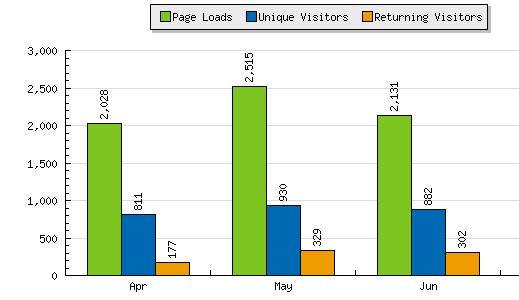
Site traffic in June was down slightly from that of May (see chart), confirming my suspicion that fewer people study the Explore the Bible Series in the summer. Nevertheless, the site remained roughly steady in returning visitors, which is a good.

Several ideas have been suggested such as make other bloggers aware of the site as well as more teachers (perhaps thru their minister of education). Bloggers are interactive and their participation will increase discussion on the site. Teachers like to make Bible lessons clear, interesting, and relevant.

If you have a blog or minister of education that we should contact, either leave a comment (using the comment link below) or send me an email at ronnieward [AT] yahoo.com.

Thanks!!

Have a great July 4 celebration. Remember, “blessed are the people whose God is the Lord.” Psalm 144:15b.

Saturday, July 01, 2006

Living for external, not temporal values

In closing this lesson, “Analyze Your Actions”, I’m reminded that we are to “lose this life” and seek first the kingdom of God. According to Dr. Harry Leafe’s book Running to Win that means we are to live for eternal as opposed to temporal values.

I’d like you to add everyday examples of “How to live for God” using the comment link below. To get started consider these ideas:

1. In picking a vacation, select a place where you can also minister while you are visiting.

2. In deciding on a place to eat out, invite a widow, or a poor person to go with you.

3. When shopping for clothes, buy also for those who perform services for you (eg. lawn maintenance service, house cleaning service)

Your thoughts?